

How to Wash Kids Clothes Properly: A Parent's Guide

Table of Contents
- What You'll Need Before You Start
- Reading Laundry Care Symbols Explained
- Sorting and Preparing Kids Clothes for Washing
- How to Remove Grass Stains from Kids Clothes
- Choosing the Right Detergent for Sensitive Skin
- Selecting Washing Machine Settings and Water Temperature
- How to Wash Kids Clothes Properly: Step-by-Step Process
- Drying Methods: Air Dry vs Tumble Dry
- Frequently Asked Questions
Last Updated: October 4, 2026
What You'll Need Before You Start
Before you wash kids clothes properly, gather these essentials: mild detergent formulated for sensitive skin, stain treatment spray, a mesh laundry bag, white vinegar, and a drying rack or clothesline.
Here's what to have on hand:
- Mild, hypoallergenic detergent (non-bio or baby-specific)
- Stain treatment spray or paste
- Fabric softener (optional, but helpful for softness)
- A mesh laundry bag for delicate items
- White vinegar for natural softening
- Drying rack or clothesline for air dry options
Reading Laundry Care Symbols Explained
Laundry care symbols are small icons on clothing tags that tell you exactly how to treat each garment. Ignoring them causes shrinkage, fading, and tears.
Here's what the main symbols mean:
- Washtub with number: Maximum water temperature in degrees Celsius (30°C, 40°C, 60°C)
- Single line under tub: Synthetic cycle, gentler agitation
- Double line under tub: Delicate cycle, minimal agitation
- X through tub: Do not wash
- Circle: Dry cleaning symbol
- Triangle: Bleach allowed (or not, if crossed out)
- Square with circle: Dry cleaning possible
- Square with X: Do not dry clean
Kids' clothes typically need 30°C or 40°C to prevent shrinkage and protect elastic. A single line under the tub symbol means synthetic cycle; two lines mean delicate cycle. These settings reduce agitation and protect fabrics.
Sorting and Preparing Kids Clothes for Washing
Sorting laundry prevents colour bleeding, protects delicate fabrics, and keeps clothes looking newer longer.
Separating whites and colours
The first rule: separate whites from colours. Whites go in one pile. Colours go in another. This simple step stops red socks from turning everything pink.
Sort coloured clothes into darks, mediums, and lights. Wash new coloured items separately for the first 2-3 washes, as new dyes bleed. Whites tolerate up to 60°C; colours need 30-40°C to prevent fading.
Checking pockets and treating visible marks
Check pockets for coins, tissues, and debris. Turn clothes with graphic prints inside out to protect designs. Pre-treat visible stains before washing. Zip zips and button buttons to prevent snagging.
How to Remove Grass Stains from Kids Clothes
Grass stains are common but easy to remove if treated before washing. Heat sets stains permanently, so act quickly.
Here's how to remove grass stains from kids clothes:
- Rinse with cold water immediately. Don't use hot water. Cold water stops the stain from setting.
- Apply a stain treatment. Use a commercial stain remover, or make a paste with mild detergent and water.
- Let it sit for 10-15 minutes. The treatment needs time to break down the grass pigment.
- Gently scrub the area. Use a soft brush or old toothbrush. Don't scrub hard, you'll damage the fabric.
- Rinse again with cold water. Check if the stain is gone before putting the item in the washing machine.
- Wash normally. Use your standard wash cycle with mild detergent.
If the stain persists after washing, repeat the treatment before drying. Heat from the tumble dryer sets stains permanently.
Choosing the Right Detergent for Sensitive Skin
Choose non-bio detergents formulated for sensitive skin or babies. Bio detergents contain enzymes that irritate sensitive skin; non-bio versions clean without them.
Ingredients to avoid for children with eczema and sensitive skin
If your child has eczema, dermatitis, or a documented skin sensitivity, check the ingredient list carefully. Many mainstream detergents contain compounds that trigger flare-ups:
Avoid: SLS/SLES (strip natural oils), optical brighteners (cause dermatitis), fragrances (leading cause of contact dermatitis, choose fragrance-free), phosphates, artificial dyes, and parabens.
Detergent formats: liquid vs powder
Liquid detergents dissolve better in cold water and leave less residue than powder. For 30-40°C washes and sensitive skin, liquid is the better choice.
Dosing matters more than you think
Use half the bottle's recommended amount for standard loads, one-quarter for lightly soiled clothes. Excess detergent leaves a film that irritates skin and reduces absorbency. Soft water requires even less.
If your child has eczema or sensitive skin, run an extra rinse cycle. This removes detergent residue that can trigger irritation.
Selecting Washing Machine Settings and Water Temperature
For kids' clothes, use 30°C (cold, gentlest) or 40°C (warm, better cleaning). Avoid hot water, which shrinks fabrics and fades dyes.
Use normal cycle for everyday clothes at 30-40°C. Check care labels: single line = synthetic cycle, two lines = delicate cycle. Delicate items like tights and embellished pieces need the delicate setting.
Use medium spin speed (800-1000 rpm) for kids' clothes. Lower speeds are gentler but leave clothes wetter; higher speeds stress delicate fabrics.
How to Wash Kids Clothes Properly: Step-by-Step Process
Here's the complete process for washing kids clothes properly. Follow these steps to keep clothes clean, soft, and long-lasting.
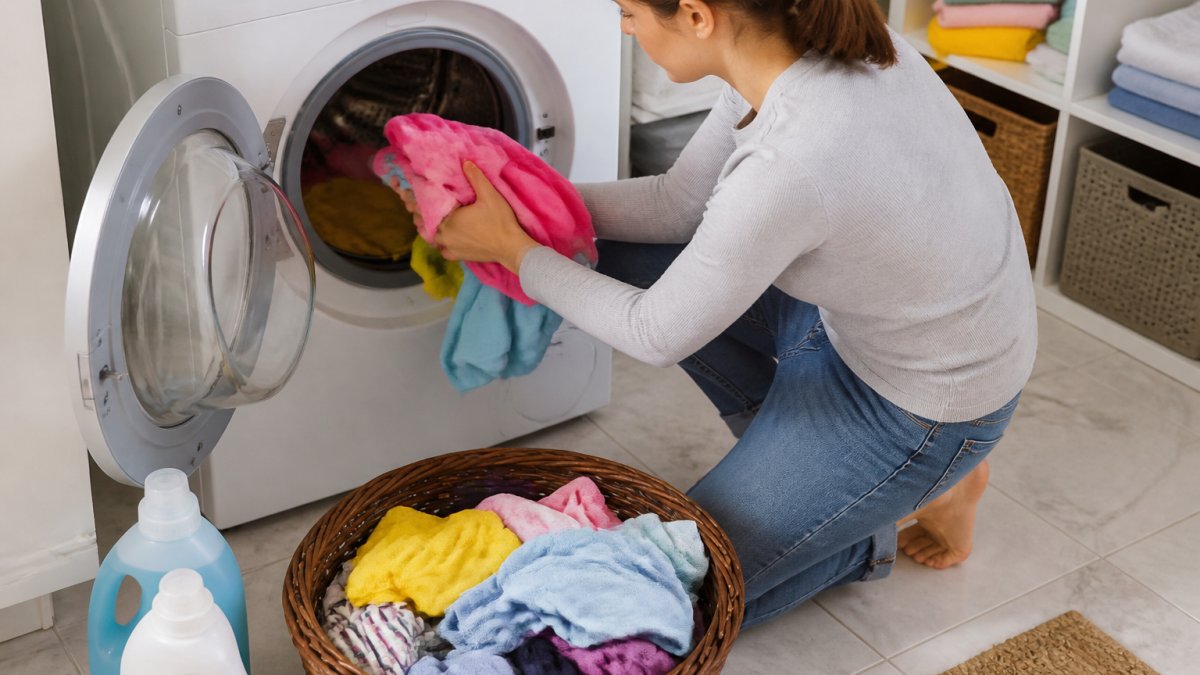
Step 1: Load the washing machine
Fill the drum 75% full (fit your hand on top). Sort by colour one final time. Turn delicate items inside out and place in a mesh bag to protect prints and elastic.
Step 2: Add detergent and run the cycle
Add detergent (use less than the bottle recommends). Use the extra rinse cycle to remove residue. Select 30-40°C and synthetic or normal cycle, then start.
Step 3: Remove and dry immediately
Remove clothes immediately to prevent mildew. Check stains are gone before drying; never dry stained clothes. Shake out items to reduce wrinkles.
Time-saving workflow for busy parents
Washing kids' clothes doesn't have to consume your week. A structured workflow saves time and reduces decision fatigue:
Designate washing days (e.g., Monday and Thursday). Use three laundry baskets for sorting at the source. Batch similar items (towels, bedding, clothes). Use delay-start if available. Hang slow-drying items immediately; fold quick-drying items into a basket.
Laundry stripping for heavily soiled play clothes
Play clothes, especially those worn during outdoor activities, accumulate dirt, sweat, and residue that regular washing doesn't fully remove. Over time, clothes look dingy and smell stale even after washing. Laundry stripping is a deep-clean technique that removes built-up grime without damaging fabrics.
What is laundry stripping? It's a soak process that uses hot water, detergent, and borax (or washing soda) to strip away accumulated residue, body oils, and mineral deposits from fibres. The process is safe for most children's clothes and dramatically improves appearance and smell.
When to use it: Use laundry stripping for clothes that look grey or dingy, smell musty even after washing, or have visible stains that won't come out. It's particularly effective for play clothes, school uniforms, and items worn during sports.
How to strip laundry:
- Fill a bathtub or large basin with hot water (as hot as your tap allows, around 50-60°C).
- Add one tablespoon of borax, one tablespoon of washing soda, and one tablespoon of non-bio detergent. Stir until dissolved.
- Submerge the clothes and let them soak for 4-8 hours (or overnight). Stir occasionally if possible.
- Drain the tub and rinse the clothes thoroughly under cold running water until the water runs clear. This removes all residue.
- Wash normally in the machine at 40°C with mild detergent.
- Air dry.
Clothes emerge noticeably brighter, softer, and fresher-smelling. The process is safe for most fabrics but avoid it for delicate items or anything with elastic, as prolonged soaking can weaken these components.
Drying Methods: Air Dry vs Tumble Dry
How you dry clothes affects their lifespan and softness. Two main options exist: air dry and tumble dry.
Air drying is gentler on fabrics. It prevents shrinkage, protects elastic, and preserves colours. Clothes dried in the sun naturally bleach slightly, keeping whites bright. Air drying takes longer but costs nothing in electricity.
Hang clothes on a drying rack or clothesline. Space items so air circulates around them. Avoid direct, intense sunlight on delicate or dark colours, it fades them quickly.
Tumble drying is faster but harsher. Heat shrinks fabrics, weakens elastic, and fades colours. Frequent tumble drying shortens a garment's life.
Use low heat settings (30-40°C) if you must tumble dry. Remove items while slightly damp to reduce creasing and heat damage.
The best approach: air dry most items. Use tumble dry only for towels, thick fabrics, and items that need quick drying.
For best baby clothing brands for durability, air drying is essential. Quality children's clothes last years longer when dried gently. Chez-Suzieaby's carefully crafted pieces maintain their softness and shape when air-dried, making them perfect for passing down to younger siblings.
Washing kids clothes properly doesn't require special knowledge. It requires the right approach: sorting by colour, checking care labels, using mild detergent, and choosing gentle drying methods. At Chez-Suzieaby, we create children's clothing designed to last through multiple children and years of wear. When you combine quality fabrics with proper washing techniques, clothes stay soft, vibrant, and comfortable for sensitive skin. Start with these steps today and watch your children's favourite pieces stay looking new.
Frequently Asked Questions
How should I wash my child's clothes?
Sort clothes by colour and fabric type, check care labels, use a mild, hypoallergenic detergent, and select a delicate or gentle cycle with cold to lukewarm water (30°C). Avoid fabric softener, which can irritate sensitive skin. Remove items promptly after the rinse cycle completes to prevent creasing and mildew. Air drying is gentler than tumble drying and helps preserve elasticity and colour.
Do you need to wash kids' clothes before wearing them?
Yes, washing new children's clothes before first wear removes manufacturing residues, dyes, and dust. Use a gentle cycle with mild detergent and extra rinses. This is especially important for babies and children with sensitive skin, as unwashed fabrics may contain irritants that cause rashes or discomfort.
What water temperature is best for how to wash kids clothes properly?
Cold water (below 20°C) or lukewarm water (around 30°C) is safest for most children's clothing. Cold water prevents shrinkage, preserves colours, and uses less energy. Hot water can damage delicate fabrics and fade prints. Check individual care labels, as some items may require specific temperatures. When treating stains like grass, pre-soaking in cold water before washing works well.
Should I use fabric softener on kids' clothes?
Avoid fabric softener on children's clothes, especially for babies and those with sensitive skin. Softeners coat fabrics with chemicals that can trigger allergic reactions and reduce absorbency. Instead, use an extra rinse cycle to remove detergent residue, which naturally softens clothes. Air drying also helps maintain softness without chemical additives.