

Organic Cotton vs Bamboo Baby Pyjamas for Sleep

Last Updated: November 21, 2026
Quick Summary
For baby pyjamas, organic cotton is the familiar, breathable and easy-care choice, while bamboo baby pyjamas usually use bamboo viscose, which feels smoother and cool at first touch. Neither fibre prevents overheating, so choose by season, comfort and care needs.
- Most bamboo baby clothing is bamboo viscose, not bamboo fibre, so check the product description.
- Breathability depends on knit thickness, layers and room temperature as much as on the fibre.
- Bamboo viscose feels cool at first touch, but that feeling fades as the fabric warms.
- Organic cotton holds its shape well and softens with washing.
- Wash both fibres on a gentle cycle, avoid high heat and skip fabric softener.
Table of Contents
- Organic Cotton vs Bamboo Baby Pyjamas: What the Fabrics Really Are
- Breathability, Temperature and Safe Sleep Warmth
- Softness and Suitability for Sensitive Skin
- Bamboo Baby Pyjamas: Pros and Cons
- Organic Cotton Baby Sleepwear: Pros and Cons
- How to Wash Bamboo Baby Clothes and Protect Fit Over Time
- Choosing the Right Pyjamas for Your Baby's Sleep and Budget
- Frequently Asked Questions
Organic Cotton vs Bamboo Baby Pyjamas: What the Fabrics Really Are
Choosing baby pyjamas for sleep usually comes down to two natural fibres: organic cotton and bamboo. At Chez-Suzieaby, we sell long-sleeve and short-sleeve baby sleepwear and bodysuits, including cotton and cotton-blend styles. Baby pyjamas are the garment a baby wears for most of the night, so the fibre matters more than many parents expect.
Organic cotton is a natural plant fibre grown without synthetic pesticides and processed without harsh chemical treatments. Browse organic cotton baby clothing for boys and girls to see what is available. It is soft, breathable and familiar, and it has a long track record in babywear. Bamboo fabric is different. Most "bamboo" baby clothing is bamboo-derived viscose, a regenerated cellulose fibre made by dissolving bamboo pulp in chemicals and spinning it into yarn. The result is smooth and drapes well, but it is not the same material as the bamboo stalk.
This distinction matters. When a label says "bamboo", ask whether it means bamboo fibre or bamboo viscose, and what processing was used. A cotton-based bodysuit and a bamboo-viscose pair of pyjamas will feel different against skin, wash differently and cost differently, so the rest of this guide compares them on the points parents care about most.
Breathability, Temperature and Safe Sleep Warmth
Breathability is not a single property. It depends on the fibre, the knit structure, the thickness of the garment and how many layers a baby is wearing. A loose, single-jersey cotton knit lets air move through the gaps between yarns, while a dense, brushed or padded fabric traps more warm air regardless of what fibre it is made from. That is why a thin cotton bodysuit and a thick cotton winter onesie behave very differently on the same baby in the same room.
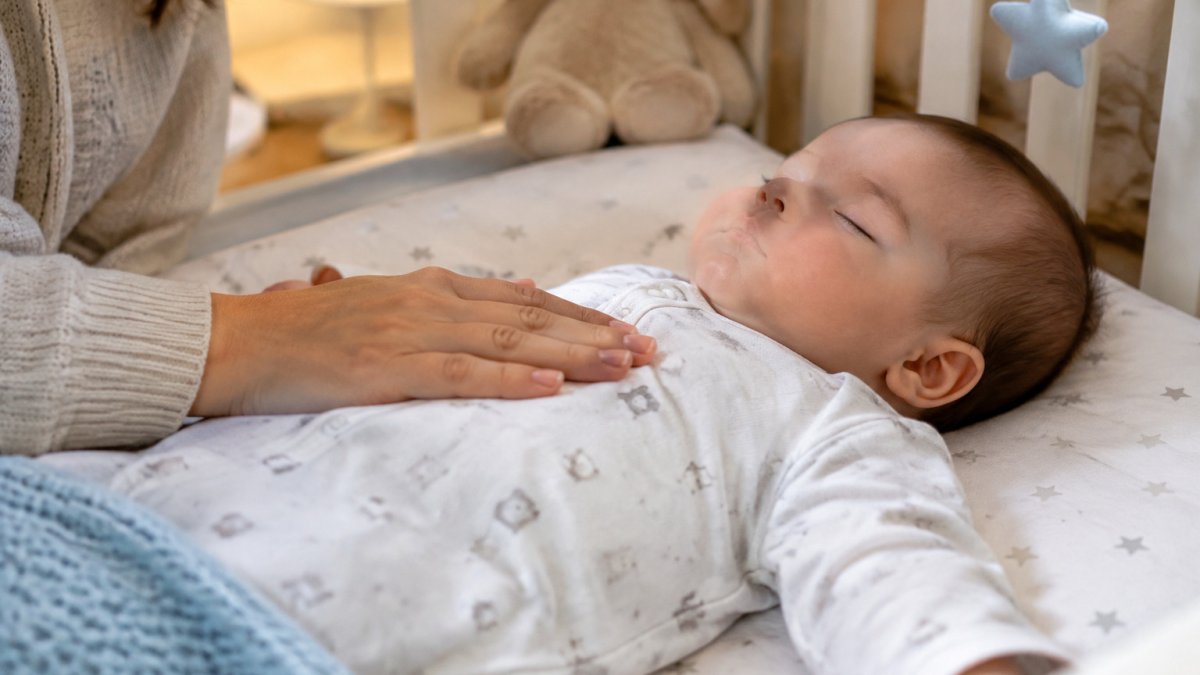
Cotton is generally breathable because its fibres and simple knits let air move through. Bamboo viscose is also breathable and is often described as cool to the touch, partly because the regenerated cellulose fibre conducts heat away from the skin quickly at first contact. That cooling sensation is a touch effect, not a guarantee of temperature control: once the fabric warms to body temperature, the feel fades and the garment behaves much like any other lightweight knit.
Moisture handling matters as much as airflow. Cotton absorbs moisture well but holds it, so a damp cotton garment can feel clammy against the skin until it dries. Neither fibre removes the need to check the baby, and neither should be relied on to prevent overheating.
Safe-sleep guidance is about the whole sleep environment, not the label inside the collar (Safe sleeping for babies). Follow current advice from the NHS and the Lullaby Trust on dressing babies for the room temperature rather than piling on layers (the NHS).
No fabric should be relied on to prevent overheating; follow safer-sleep guidance on room temperature, layers and bedding.
A practical way to judge warmth is to treat the garment as one layer and count the total. A thin cotton onesie under a sleep bag is one layer plus the bag; a padded winter onesie may already be enough on its own in a cool room. If the baby's neck feels hot or sweaty, remove a layer rather than changing fibre. If the neck feels cool, add a layer. The fibre choice affects how the garment feels and how it handles moisture, but the number of layers and the room temperature do most of the work.
The article's comparison of how each fibre handles airflow and moisture can be summarised as follows.
| Property | Organic cotton | Bamboo viscose |
|---|---|---|
| Breathability | Generally breathable; simple knits let air move | Also breathable; often described as cool to touch |
| Cool feel | Familiar, less cooling at first touch | Cool at first touch; fades as fabric warms |
| Moisture handling | Absorbs well but holds it; can feel clammy | Good moisture handling |
| Main warmth factor | Layers, knit thickness and room temperature | Layers, knit thickness and room temperature |
Softness and Suitability for Sensitive Skin
Softness is partly measurable and partly a matter of feel. Cotton softens with repeated washing. Bamboo viscose feels smoother at first touch. Neither feel is automatically better for a baby.
A baby with eczema or a persistent rash should be assessed by a GP, health visitor or paediatrician. Clothing can support comfort by reducing friction, heat and moisture against the skin, but it does not treat a skin condition. Plain, well-rinsed garments with flat seams and soft labels are generally a comfortable starting point for sensitive skin.
If you are introducing a new fibre, a simple patch test is more useful than a label claim. Wash the garment once with a mild, fragrance-free detergent, let it dry fully, and dress the baby in it for a short daytime nap before using it overnight. Watch the neck, chest, inner elbows and behind the knees, where fabric sits closest and moisture collects. Stop using the garment and speak to a health professional if redness, itching or a rash persists or spreads.
Watch out: a "bamboo" or "organic" label is not evidence that a garment suits sensitive skin, and persistent or worsening skin symptoms should be assessed by a GP or health visitor rather than managed by changing sleepwear alone.
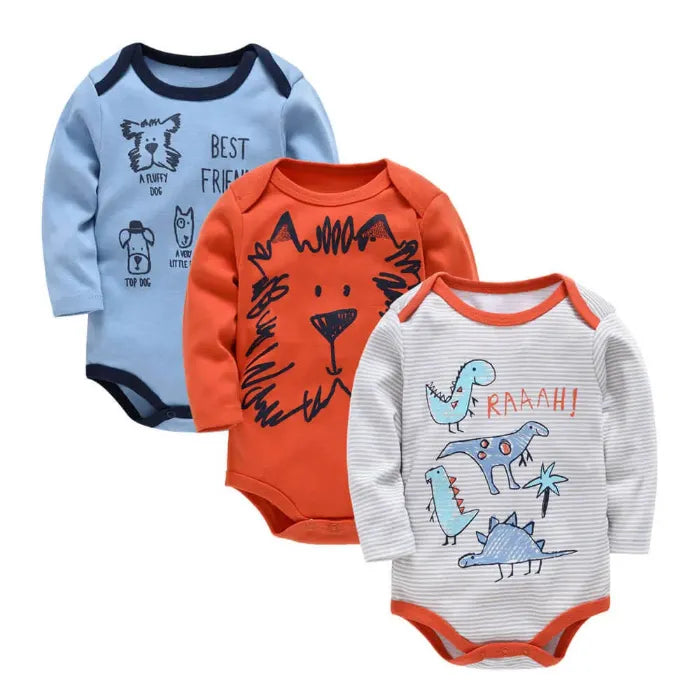
Practical choices that help either fibre work better for sensitive skin include tight, even knits, flat seams and avoiding heavy prints or raised transfers against the skin. Our Cute Animal Long Sleeve Baby Bodysuit is made from 100% cotton and is a practical starting point, and a plain cotton bodysuit is a sensible baseline before trying a bamboo viscose garment. If a baby reacts to one garment but not another of the same fibre, the finish, dye or detergent is often the more likely culprit than the fibre itself.
Bamboo Baby Pyjamas: Pros and Cons
Pros
- Very smooth and soft feel against skin
- Drapes well and often feels cool at first touch
- Good moisture handling, helping keep a baby dry in warm rooms
- Often lightweight, suited to warmer nights
Cons
- Most products are bamboo-derived viscose, not bamboo fibre, so check the label
- Viscose production uses chemical processing, which matters to parents seeking low-impact fabrics
- Can lose shape or pill faster with repeated hot washing
- Usually a higher price per garment than plain cotton
Organic Cotton Baby Sleepwear: Pros and Cons
Pros
- Familiar, natural fibre with a long history in babywear
- Breathable and reliable for year-round layering
- Holds its shape well and softens with washing
- Available in a range of styles, including our Cotton Baby Romper With Long Sleeves
Cons
- Can feel slightly less silky than viscose at first touch
- Organic certification adds cost, and not every cotton garment is organic
- Heavier cotton knits can feel warm in summer
- Shrinkage is possible if washed hot or dried on high heat
How to Wash Bamboo Baby Clothes and Protect Fit Over Time
Care affects how long any baby pyjama lasts. Wash bamboo viscose and organic cotton in a cool or warm cycle with like colours, and avoid high heat. Line-dry where you can, because heat is the main cause of shrinkage and loss of softness in both fibres. Turn garments inside out to protect prints.
Bamboo viscose is more sensitive to heat and friction than cotton, so use a gentle cycle and a mild detergent. Avoid fabric softener, which can coat fibres and reduce breathability over time. Buying one size up for growth is sensible, but check the size chart first. Our sizing follows the height chart on each product page, so check the height in centimetres rather than relying on age.
Choosing the Right Pyjamas for Your Baby's Sleep and Budget
Start with the season and the room. For spring and autumn nights, a thin long-sleeve cotton onesie such as our Autumn Thin Baby Pajamas And Onesies covers most needs. For warm summer nights, a lightweight short-sleeve bodysuit like the Soft Casual Baby Bodysuit keeps a baby cool. For colder nights, a long-sleeve cotton romper or a padded winter onesie adds warmth without extra layers.
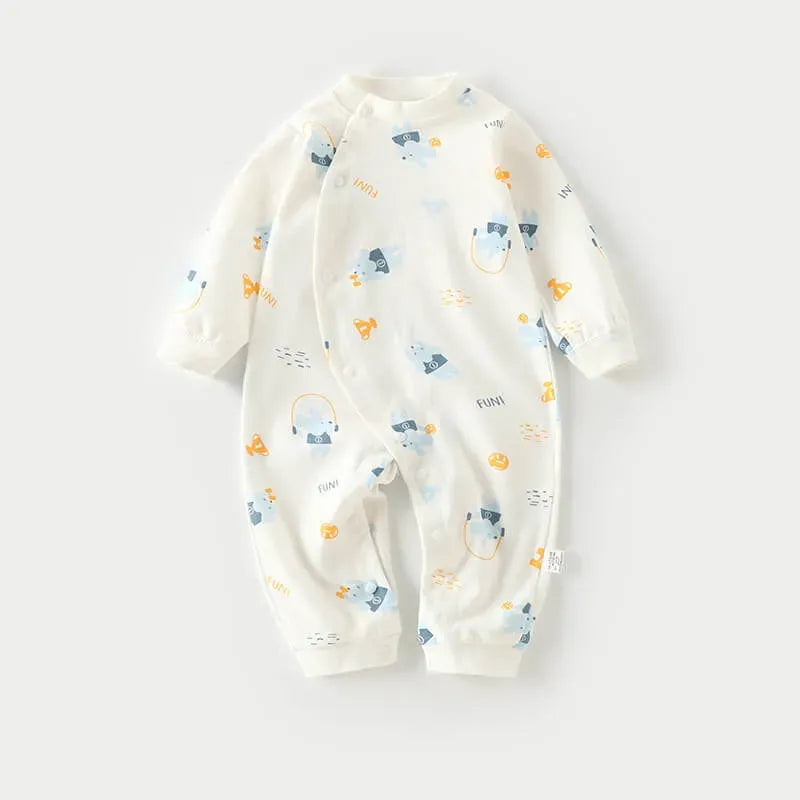
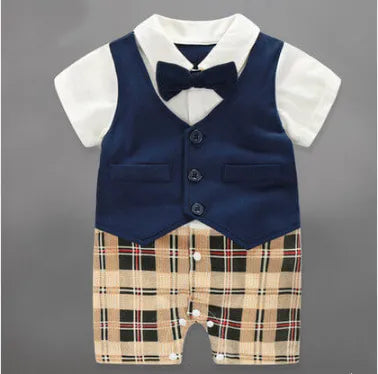
Our current prices are £19.44 for the Soft Casual Baby Bodysuit, £19.86 for the Autumn Thin Baby Pajamas And Onesies, £25.90 for the Gender Neutral Baby Onesies, £25.94 for the Cute Animal Long Sleeve Baby Bodysuit and £25.95 for the Cotton Baby Romper With Long Sleeves. Buy a few basics in the size your baby is wearing now, then add larger sizes as they grow.
Frequently Asked Questions
Is bamboo better than organic cotton for baby pyjamas? Neither fibre is better for every baby. Bamboo viscose feels smoother, while organic cotton is familiar, breathable and generally simpler to care for. Choose based on the season, your baby's comfort and the label.
What is the difference between bamboo fibre and bamboo viscose? Bamboo fibre comes from the plant stalk, while bamboo viscose is a regenerated cellulose made by dissolving bamboo pulp in chemicals. Most bamboo baby clothing is viscose, so check the product description.
Are these pyjamas suitable for sensitive skin? Plain cotton is a common choice for sensitive skin, but no fibre suits every condition. Speak to a GP or health visitor if your baby has eczema or a rash.
How should I wash bamboo baby clothes? Wash on a cool or warm gentle cycle, avoid high heat, skip fabric softener and line-dry where possible.
What size should I buy? Use the height chart on each product page, and size up if your baby falls between two sizes.
Frequently Asked Questions
Are organic cotton or bamboo pyjamas better for babies?
Neither fabric is better in every case. Cotton is a natural fibre that is widely used for baby sleepwear. Bamboo-derived viscose is very soft and drapes well, but it is a processed fibre, so check the label and care instructions carefully. Choose based on your baby's skin, the room temperature and how you plan to wash the garments. Chez-Suzieaby's Autumn Thin Baby Pajamas and Onesies, from £19.86, are a cotton option for lighter sleep seasons.
Is bamboo fabric safe for babies with sensitive skin?
Many parents find bamboo-derived viscose very soft, but the research on sensitive skin is limited, and individual babies react differently. Whichever fabric you choose, patch test a new garment against a small area of skin, wash it before first use and stop using it if redness or rash appears. If skin problems persist, speak to your GP or health visitor.
How should you wash bamboo and organic cotton baby pyjamas?
Wash both fabrics on a gentle cycle in cool or warm water with a mild, fragrance-free detergent, and avoid fabric softener, which can reduce absorbency. Turn garments inside out to protect prints and fastenings. Bamboo-derived viscose can lose shape and shrink more readily under hot water or high-heat drying, so air dry it flat where possible. Line drying helps garments keep their size.
Which lasts longer: bamboo or organic cotton baby clothes?
Cotton is generally more durable through repeated washing, while bamboo-derived viscose is more prone to pilling and loss of shape with harsh care. Garment lifespan depends heavily on fabric weight, knit construction and how the garment is washed. Choosing a well-made pair and following the care label will matter more to longevity than the fibre alone. Chez-Suzieaby's Gender Neutral Baby Onesies, from £25.90, are made from a cotton-rich blend.
