

Do Toddlers Need Arch Support in Their Shoes?

Last Updated: November 21, 2026
Quick Summary
Most toddlers do not need arch support in their shoes, because flat-looking feet are normal at this age. Arches develop gradually over several years as muscles strengthen and the fat pad under the foot thins. A flexible, well-fitting shoe is usually the better choice than a rigid, supportive one.
- Flat-looking feet are common in young children and usually do not cause pain.
- Arches typically become visible between ages three and five, and clearer by school age.
- Check that there is about a thumb's width of space in front of the longest toe.
- Choose shoes with a flexible sole, a breathable upper and a secure fastening.
- Recheck shoe fit every three months, because toddler feet can grow quickly.
Table of Contents
- Why Toddler Feet Look Flat (and Why That Is Normal)
- When Do Children's Arches Develop?
- How Should Toddler Shoes Fit?
- Best Shoes for Toddlers Learning to Walk
- Arch-Support Shoes, Inserts and Orthotics: What Is the Difference?
- Signs That Warrant a Professional Assessment
- Booking Your Child's Next Pair of First Shoes
- Frequently Asked Questions
Most parents ask this question the moment they notice their toddler's feet look flat. The short answer is that most toddlers do not need arch support in their shoes (Flatfoot in children). That flat look is normal at this age, and the right shoe is usually a flexible, well-fitting one rather than a rigid, supportive one. Below, we explain why, how arches develop, how to check fit at home, and when a professional should take a look.
Flat-looking feet are common in young children (the NHS). This is part of normal development, not a sign that something is wrong. A few simple checks at home can help you judge whether a pair of shoes fits well.
Why Toddler Feet Look Flat (and Why That Is Normal)
A toddler's foot is mostly soft tissue and cartilage. The bones are still forming, and a thick layer of fat sits under the sole. This fat pad fills in the arch, so the foot looks flat when a child stands.
As children grow and start to walk more, muscles and ligaments strengthen and the arch becomes more visible. That process takes years, not months. Flat feet in young children are very common, and in most cases they do not cause pain or walking problems.
When Do Children's Arches Develop?
Arch development happens gradually. The timeline below is a general guide, and every child develops at their own pace.
- First steps (around 12 to 18 months): Feet look flat. Balance and walking patterns are still forming.
- Early walking (18 months to 3 years): The fat pad begins to thin, and some arch shape starts to show.
- Preschool years (3 to 5 years): Muscles strengthen, and the arch becomes clearer when standing.
- School age (6 to 8 years): Most children have a visible arch, though its height still varies between children.
Typical stages from first steps to age eight
Development is not a straight line. Some children show a visible arch early, and others take longer. Regular checks at each stage help you notice changes over time.
How Should Toddler Shoes Fit?
Good fit matters more than arch support for most toddlers. Shoes that are too tight, too stiff or too short can cause more problems than a flat foot does.
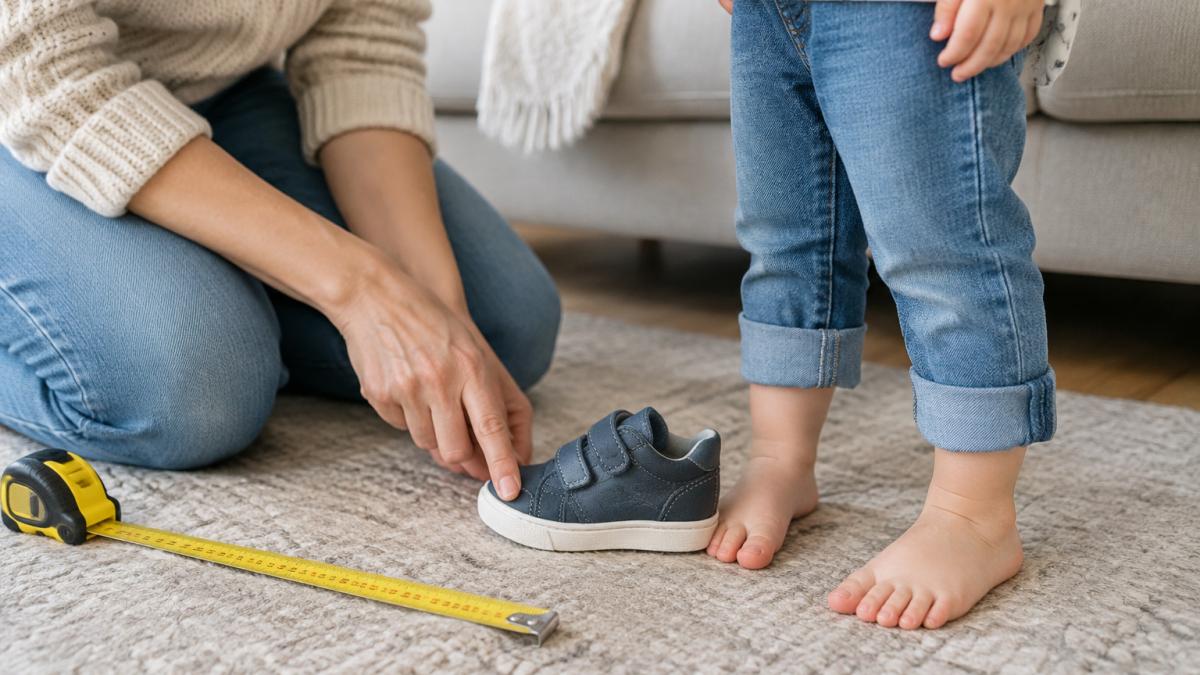
Look for these features:
- A flexible sole that bends where the foot bends
- A lightweight upper made of breathable material
- A firm heel counter that holds the back of the foot in place
- A secure fastening, such as a hook-and-loop strap, that adjusts to the foot
A practical home shoe-fitting checklist
Use this checklist each time you buy new shoes or your child's feet seem to have grown:
- Stand your child up with the shoe on and press the toe. You should feel roughly a thumb's width of space in front of the longest toe.
- Check that the heel does not slip when your child walks.
- Look for pressure marks or redness on the top of the foot or along the sides after wearing.
- Make sure the sole bends easily when you hold the toe and heel.
- Measure both feet, since they are often slightly different sizes, and fit the larger one.
- Recheck the fit every three months, because toddler feet can grow quickly.
The checklist below summarises the main fit checks a parent can do at home.
| Check | What to look for | Frequency |
|---|---|---|
| Toe room | About a thumb's width in front of the longest toe | Each new purchase |
| Heel | Does not slip when walking | Each new purchase |
| Skin | No pressure marks or redness after wearing | After wearing |
| Sole | Bends easily when toe and heel are held | Each new purchase |
| Size | Fit the larger foot | Each new purchase |
| Recheck | Feet can grow quickly | Every three months |
Best Shoes for Toddlers Learning to Walk
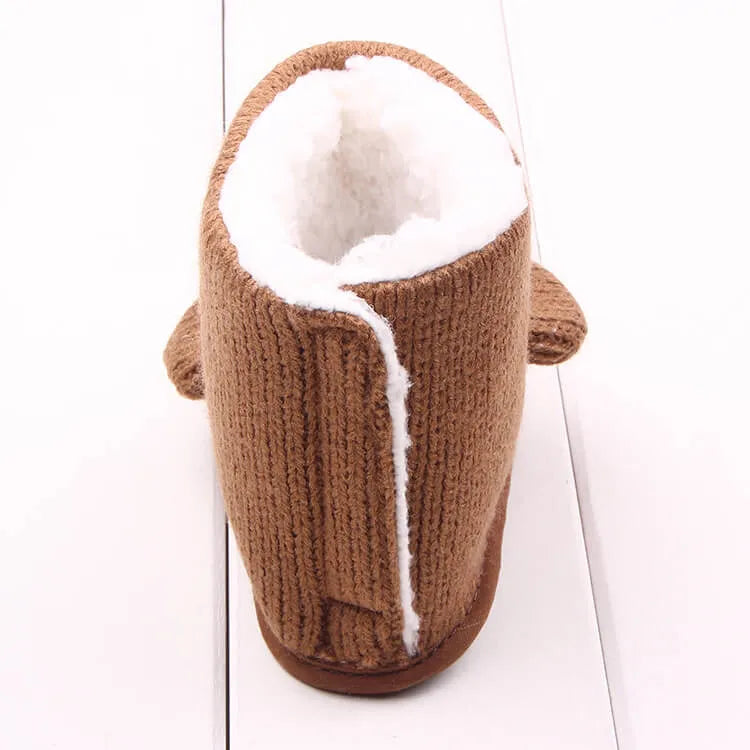
For children who are just starting to walk, soft and flexible shoes usually work best. They allow the foot to move naturally and help the child develop balance.
The Flexible Sole Toddler Shoes at £17.20 have a soft cotton cloth upper and a Velcro strap, and are lightweight and breathable. You can see the full range here: Flexible Sole Toddler Shoes | Lightweight Baby Shoes.
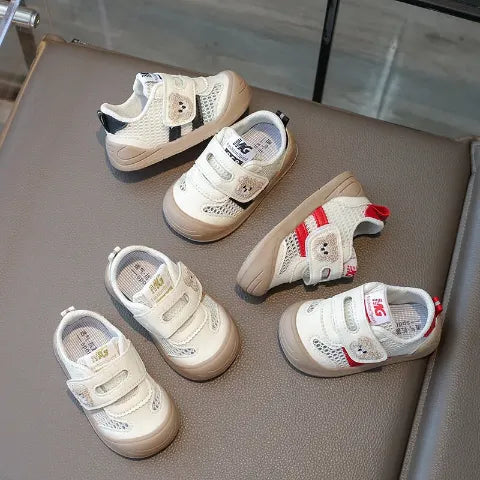
For a lighter sneaker with good ventilation, the Unisex Soft Bottom Casual Mesh Sneakers at £23.17 suit spring and summer use. Parents looking for a stable, grippy option can also consider our Best Non-Slip Shoes For Toddlers | Safe And Soft-Soled Shoes For Baby at £17.02, which has a soft, flexible sole.
Arch-Support Shoes, Inserts and Orthotics: What Is the Difference?
These three options are often used interchangeably in conversation, but they are different products with different purposes. Understanding the distinction helps you judge whether any of them is relevant to your toddler.
Supportive shoes are ordinary footwear with a firmer heel counter, a slightly shaped footbed and a less flexible sole. They are sold in high-street shoe shops and online, usually in the same price range as other children's shoes. Their support is built into the shoe and cannot be adjusted. For a toddler with typical development, a supportive shoe is rarely necessary, and a flexible, well-fitting shoe is usually the better choice.
Arch inserts are removable pieces placed inside a shoe. They are sold over the counter, often for a modest sum, and range from simple foam pads to firmer moulded shapes. They can change how a shoe feels, but they cannot correct a shoe that is the wrong size or shape, and they are not made for an individual foot. Most practitioners would not recommend an off-the-shelf insert for a toddler unless a clinician has suggested one for a specific reason.
Prescribed orthotics are custom devices made after a clinical assessment, usually by a podiatrist or an orthotist. They are made to the measurements of a particular child's foot and are supplied through a clinical service or a specialist provider. They are intended for specific medical needs rather than general comfort, and they are not a routine purchase for a toddler with flat-looking feet.
The practical point is that these options sit on a scale from general footwear to individual medical devices. A supportive shoe is a shoe; an insert is an accessory; an orthotic is a clinical intervention. If a professional suggests an orthotic, ask what it is intended to achieve and how its fit will be reviewed as your child grows, because a device made for one stage of foot development will need reassessing.
Signs That Warrant a Professional Assessment
Most flat feet in toddlers need no treatment (Flat foot - Paediatric Orthopaedics). The difficulty for parents is separating normal developmental flat feet from the smaller number of cases where a professional opinion is useful. The signs below are the ones most practitioners would want to hear about, and each is paired with what it can indicate so you can describe it clearly at an appointment.
- Pain that limits activity. A toddler who stops walking, asks to be carried, or avoids a favourite game because of foot, leg or hip pain is showing something different from a flat-looking foot. Pain is the single most useful signal because developmental flat feet are not painful.
- Stiffness rather than flexibility. A flexible flat foot changes shape when your child stands on tiptoe or when you lift the toes. A foot that stays rigid, or that cannot be moved through its normal range, is worth assessing.
- Asymmetry. Feet are often slightly different in size, but one foot that is markedly flatter, turned in or turned out compared with the other deserves a look, particularly if the difference is new.
- Walking pattern that stands out. Frequent tripping, an unusual gait, walking on the toes most of the time, or difficulty keeping up with children of the same age can all have simple explanations, but persistent patterns are easier to assess early.
- Skin or nail changes. Persistent redness, blisters, calluses or pressure marks along the sides or top of the foot usually point to a fit problem rather than an arch problem, but they are worth raising if they keep returning.
- A concern that persists. Parental instinct is a legitimate reason to ask. If something about the way your child stands or walks continues to bother you after a few weeks, a brief check is reasonable.
A GP or health visitor is usually the first point of contact and can decide whether a referral to a podiatrist or paediatric service is needed. In most cases the outcome is reassurance, but early advice helps identify the rare cases that benefit from further care.
Watch out: a single photograph or a quick look at a flat foot is not enough to judge arch development, because the fat pad and standing position change the appearance, describe what you see in person and let a clinician examine it.
Booking Your Child's Next Pair of First Shoes
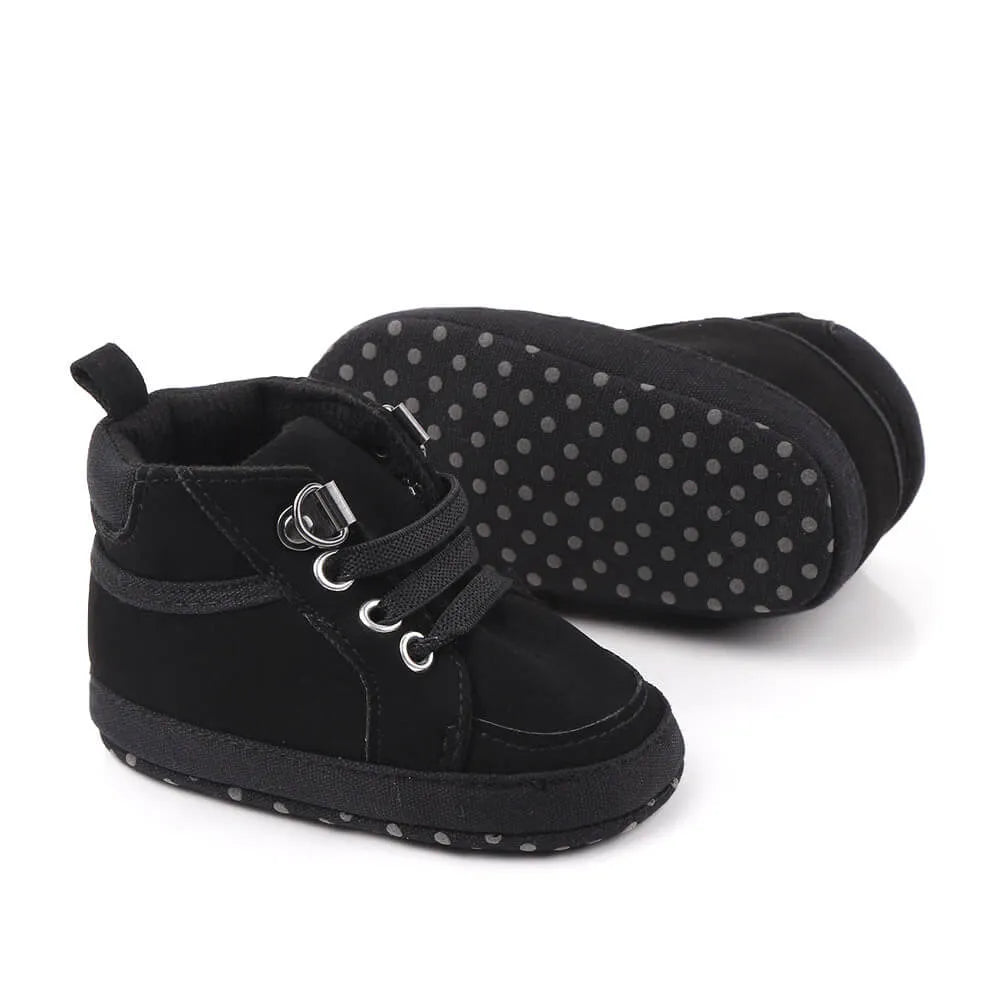
When it is time for a new pair, choose a flexible, well-fitting shoe and run through the checklist above. The Best Non-Slip Shoes For Toddlers are designed with a soft, flexible sole for new walkers. Browse the collection and find the pair that suits your child: Non Slip Childrens Toddler Shoes Lightweight Sneakers For Baby.
Frequently Asked Questions
Do toddlers need arch support in their shoes?
Most toddlers do not need arch support. Young children's feet have a fat pad and soft tissue that make the arch look flat, and the arch develops gradually through childhood as muscles and ligaments strengthen. Good first shoes should be flexible, have a secure heel and enough room at the toes, and let the foot move naturally. Support or specialist footwear is generally only considered when a paediatric professional identifies a specific problem, such as pain, stiffness or an unusual walking pattern.
Is it normal for toddlers to have flat feet?
Yes, flat-looking feet are normal in toddlers. The arch is not fully formed in early childhood, and the padding under the foot hides it, so most children appear flat until around the age of six. Flat feet become a concern only if they cause pain, fatigue, frequent tripping, or a marked change in how the child walks. If you are unsure, a GP or podiatrist can check your child's feet and advise whether anything needs follow-up.
How can I tell if my toddler's shoes fit properly?
Check that there is roughly a thumb's width of space between the longest toe and the front of the shoe, that the heel does not slip when your child walks, and that the shoe bends easily at the ball of the foot. Look for red marks or pressure points after wearing. Measure both feet, since one is often slightly larger, and re-measure every few months, because toddler feet can grow quickly. Fitting in the afternoon is helpful, as feet swell a little during the day.
What features should I look for in first-walker shoes?
Look for a soft, flexible sole that bends at the forefoot, a lightweight and breathable upper, a secure fastening such as a hook-and-loop strap, and a snug heel counter that holds the foot in place. Non-slip soles help on smooth floors. Avoid stiff, heavy boots and shoes with thick rigid soles, as these restrict natural movement. Your child's Chez-Suzieaby first-walker options, such as the Flexible Sole Toddler Shoes at £17.20, are designed with these features in mind.
