

Affordable Alternatives to Expensive Orthopedic Toddler Shoes

Quick Summary
Affordable alternatives to expensive orthopedic toddler shoes are standard shoes with a flexible sole, room for the toes and a secure heel, which often suits a growing foot better than a specialist label. Budget options in the Chez-Suzieaby range start at £15.88. If a health professional has prescribed orthopedic footwear, follow their advice rather than substituting a budget shoe.
- Fit matters more than brand for a growing foot.
- If a clinician has prescribed specialist footwear, follow their advice.
- Measure inner length in centimetres rather than trusting the size label.
- Leave around 0.5 to 1 cm of room beyond the longest toe.
- Measure toddler feet every two to three months during the first few years.
Table of Contents
- Why Parents Look for Alternatives to Orthopedic Toddler Shoes
- When Orthopedic Shoes Are Medically Necessary
- Budget-Ranked Alternatives From Chez-Suzieaby
- How to Check Toddler Shoe Fit at Home
- How Often to Measure Toddler Feet
- Signs Toddler Shoes Are Too Small
- Choosing Your Next Pair of Toddler Shoes
- Frequently Asked Questions
Why Parents Look for Alternatives to Orthopedic Toddler Shoes
Last Updated: November 25, 2026
Many parents start looking for a cheaper option the moment they see the price of orthopedic footwear for a young child.
Orthopedic toddler shoes cost far more than standard footwear, and many parents feel they pay for features their child does not need. Others want to know what a good, supportive shoe looks like before spending that kind of money.
Fit matters more than brand. A well-fitting shoe with a flexible sole, room for the toes and a secure heel often does more for a growing foot than a specialist label.
When Orthopedic Shoes Are Medically Necessary
Orthopedic footwear is designed for children with a diagnosed condition that affects how they walk or stand.
If a health professional has recommended specialist footwear, follow their advice rather than substituting a budget shoe. A podiatrist or paediatric physiotherapist can explain what the child needs and whether a standard shoe will do.
Many toddlers wear ordinary shoes without any problem. Early walking is a period of normal variation, and a flexible, well-fitting everyday shoe is often all that is required. If unsure, ask your GP or health visitor for a referral.
Budget-Ranked Alternatives From Chez-Suzieaby
The Chez-Suzieaby range is ranked from lowest to highest price. Each listing covers its main strengths and best use. The table also shows a rough cost-per-wear estimate based on a 90-day wear cycle, the typical interval before a toddler's foot outgrows a pair.
| Shoe | Price | Best For | Main Strength | Approx. cost per wear (90 days) |
|---|---|---|---|---|
| Unisex Toddler Casual Sneakers | £15.88 | Budget spring and autumn wear | Synthetic leather, flexible sole | £0.18 |
| Best Non-Slip Shoes For Toddlers | £17.02 | Everyday indoor and outdoor play | Soft sole, high-top support | £0.19 |
| Baby Footwear With Toe Protection | £17.60 | Early walkers needing toe cover | Soft cotton upper, non-slip sole | £0.20 |
| Flexible Sole Baby Sandals | £21.24 | Warm-weather early walkers | Mesh upper, lightweight build | £0.24 |
| Lightweight Toddler Walking Shoes (Girls) | £23.04 | First walkers | Synthetic leather, rubber sole | £0.26 |
| Unisex Soft Bottom Casual Mesh Sneakers | £23.17 | Hot days and active play | Breathable mesh, Velcro closure | £0.26 |
| Lightweight Toddler Walking Shoes (0-18 Months) | £31.44 | Waterproof everyday use | Waterproof, shock-absorbing sole | £0.35 |
| Children Low-Top Board Shoes | £31.65 | Casual daily wear | Cartoon design, PVC outsole | £0.35 |
| Best Barefoot Shoes For Toddlers | £33.25 | Wide-foot and active children | Breathable pigskin upper, rubber outsole | £0.37 |
| Autumn Children's Canvas Casual Shoes | £35.71 | Higher-top ankle support | Canvas upper, rubber sole | £0.40 |
Price
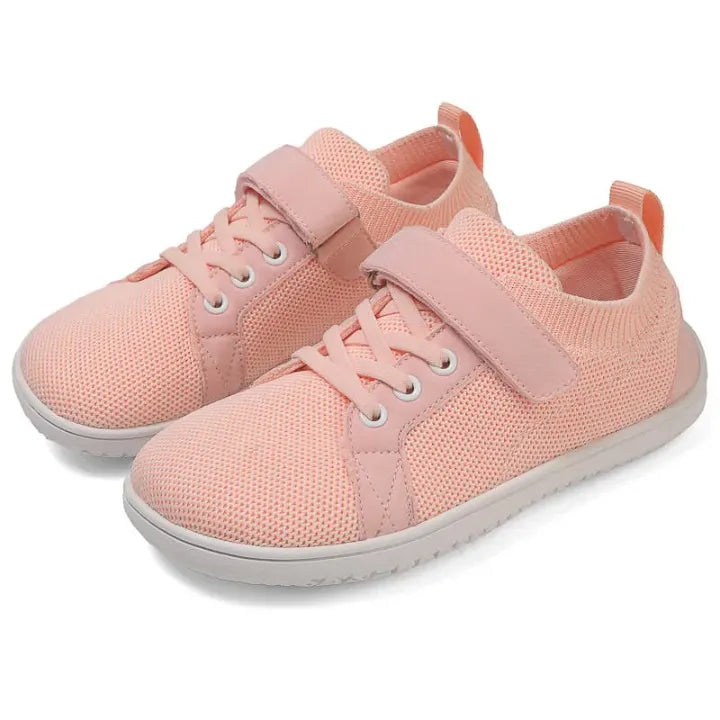
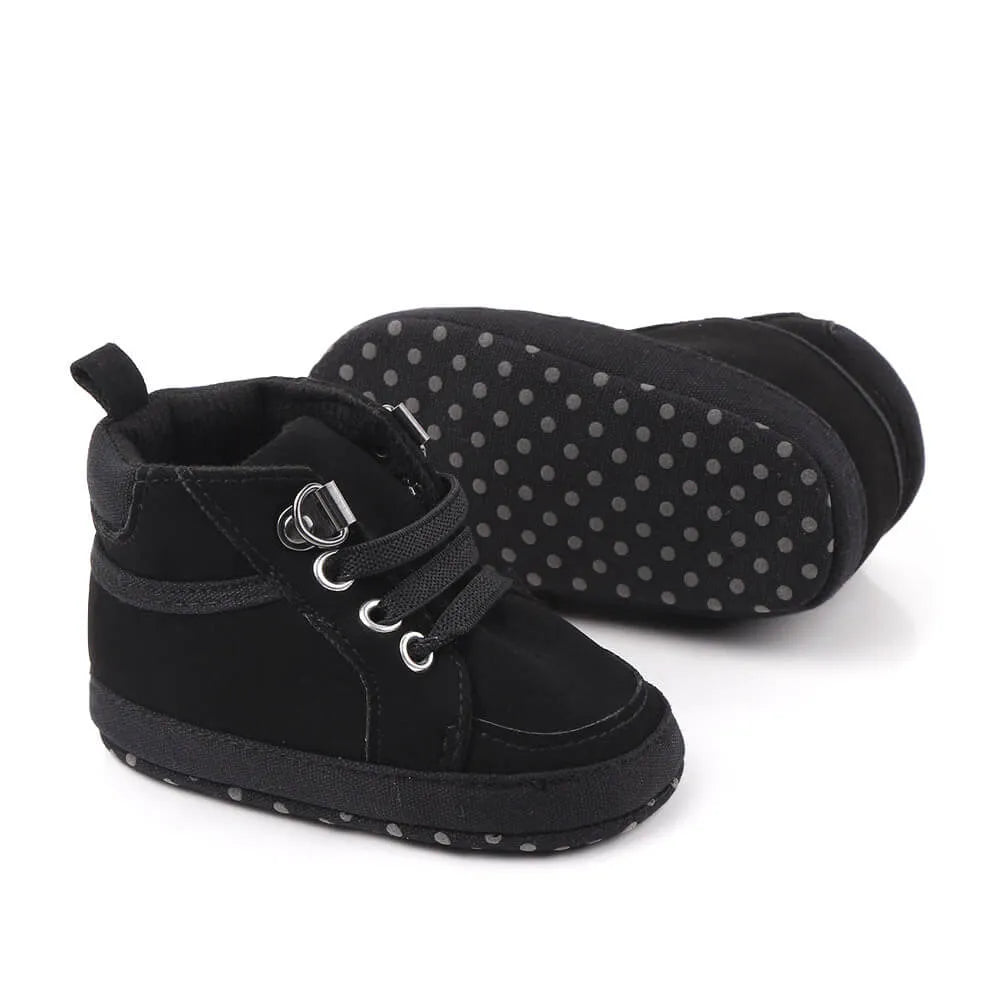
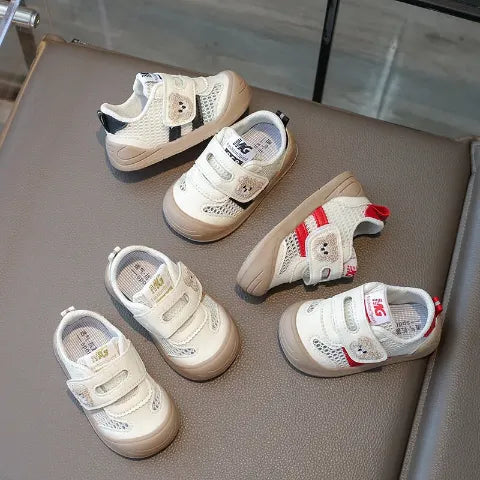
Lowest-priced options for everyday wear
Unisex Toddler Casual Sneakers (£15.88). The lowest-priced option in the range. The synthetic leather upper and lightweight build suit spring and autumn wear.
Baby Footwear With Toe Protection (£17.60). A soft cotton upper and non-slip sole, suited to early walkers and spring and autumn wear. Compare this infant solid color knitted bowknot shoe for another low-cost everyday option.
Best Non-Slip Shoes For Toddlers (£17.02). A soft-soled shoe with an elastic band wearing style and a high-top upper, suited to everyday wear.
Flexible sole picks for early walkers
Flexible Sole Baby Sandals (£21.24). A sandal with a flexible sole and breathable mesh upper, designed for first walkers. Parents wanting a modest-priced pre-walker can view these unisex cartoon cotton pre-walker shoes.
Lightweight Toddler Walking Shoes, Girls (£23.04). A shoe with a synthetic leather upper and rubber sole, designed for first walkers.
Unisex Soft Bottom Casual Mesh Sneakers (£23.17). Breathable mesh upper, soft bottom and Velcro closure, suited to toddlers. For a lighter, cheaper option, see these boys' slip-on sneakers.
For wider feet, the Best Barefoot Shoes For Toddlers (£33.25) is listed as a wide-width option with a breathable pigskin upper and rubber outsole.
How these compare with expensive orthopedic shoes
Expensive orthopedic footwear is typically prescribed for a specific clinical purpose and fitted by a podiatrist or orthotist. Standard everyday shoes are not a substitute for prescribed footwear, but may suit low-risk everyday wear where no clinical need has been identified.
Watch out: a cheap shoe is only a genuine alternative if it fits. If a child has a diagnosed condition, a wide or high-top budget shoe is not a substitute for prescribed footwear, check with the prescribing clinician before swapping.
Returns, sizing and the real cost of getting it wrong
Price on the label is not the whole cost. Under UK consumer law, online purchases generally come with a right to cancel; check the returns policy on the product page for the terms that apply to your order (Accepting returns and giving refunds: the law).
Sizing errors are the main reason budget shoes end up unused. Measure the inner length before ordering and compare it with the centimetre measurement from the fit check below, rather than trusting the label. If between sizes, size up: a slightly roomy shoe with a secure strap is safer than a snug one.
How to Check Toddler Shoe Fit at Home
Measure your child's feet while standing, at the end of the day when feet are slightly larger.
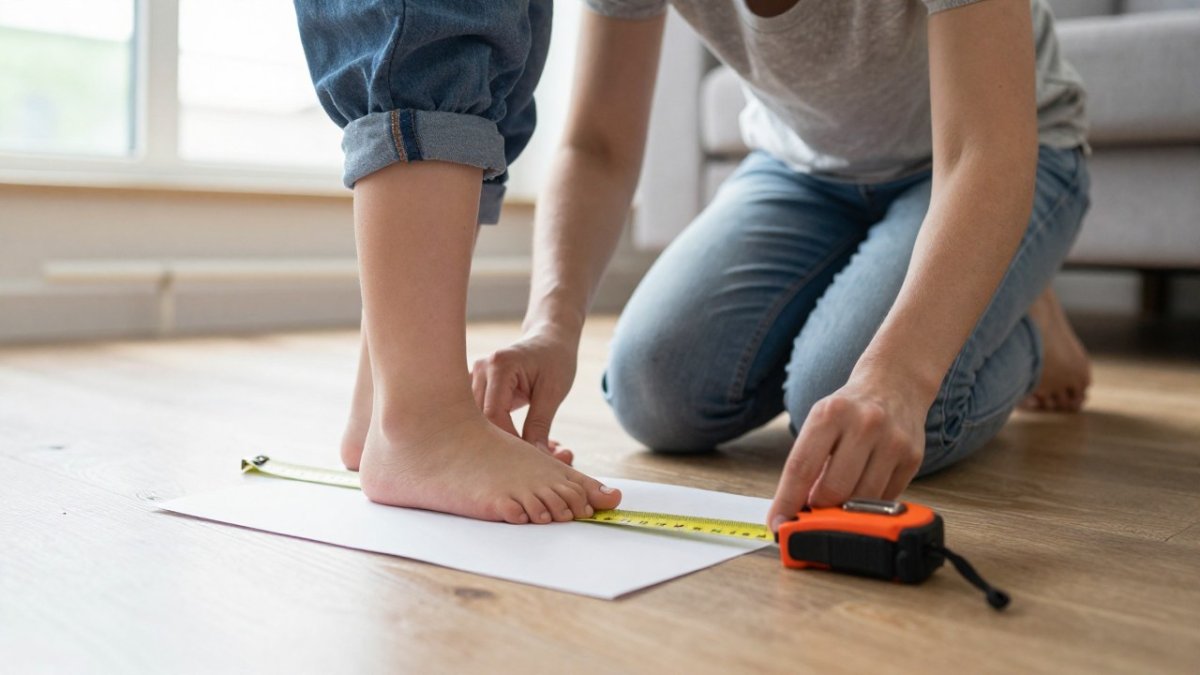
Compare that measurement with the inner length of the shoe, not the size number on the label. Why kids' clothes sizing varies so much explains why the same size differs between brands.
Press gently on the toe box. You should feel a small gap, not pressure. Check that the heel does not slip when your child walks, and that the shoe bends at the ball of the foot rather than the middle.
How Often to Measure Toddler Feet
Toddler feet grow quickly, so measure every two to three months during the first few years. A shoe that fitted perfectly in spring is often too small by autumn.
Measure again before buying any new pair, even if the child has grown only a little. Assuming the old size still works is a common reason shoes end up too tight.
Signs Toddler Shoes Are Too Small
Watch for red marks on the toes or heels after removing shoes, toes pressed against the front, and a child who stumbles or walks on tiptoe, all can point to a shoe that is too small.
A child who complains of discomfort, or wants their shoes taken off at every opportunity, may also be struggling with fit. Check the size before assuming the problem is anything else.
Choosing Your Next Pair of Toddler Shoes
Start with the fit you have measured, then choose the shoe that suits the season and activity. Lightweight, flexible shoes work best for early walkers. Higher-top or wide-width options suit children who need more ankle support or room for broader feet.
Price matters, but so does purpose. A low-cost casual sneaker suits a child who runs in the garden, while a waterproof or wide-width pair may be worth the extra spend for regular outdoor use.
The more useful question is not "which is the best toddler shoe" but "which shoe fits this child's specific need". The list below organises the range by the situations parents most often ask about.
For wide feet
A wide forefoot is common in toddlers and is not automatically a medical issue. Look for a shoe with a roomy toe box and a soft upper that does not press on the little toe. The Best Barefoot Shoes For Toddlers (£33.25) has a breathable pigskin upper and a rubber outsole.
Watch out: a wide shoe on a narrow foot will slip at the heel. If the heel lifts when the child walks, the shoe is too wide regardless of the toe room.
For children who wear braces or orthotics
If a clinician has prescribed a brace or an orthotic insert, the shoe has to accommodate it. Parents of wide-footed children can read how to choose shoes for wide toddler feet for guidance on picking the right width. That usually means a removable insole, a deeper fit and a secure fastening.
A podiatrist or orthotist can tell you whether a particular off-the-shelf shoe will work with a specific insert. Ask before buying, and take the insert with you if you are checking fit in person.
For early walkers and first steps
New walkers need a flexible sole, a low profile and as little weight as possible. The Flexible Sole Baby Sandals (£21.24) and the Lightweight Toddler Walking Shoes, Girls (£23.04) both have flexible soles. For indoor use and first steps, the Best Non-Slip Shoes For Toddlers (£17.02) have a soft sole and a high-top upper.
A common pattern is to use a soft, thin sole indoors and a slightly more protective shoe outdoors. That gives the foot plenty of natural movement while still protecting it on pavement and playgrounds.
For high-top ankle support
The Autumn Children's Canvas Casual Shoes (£35.71) have a canvas upper and rubber sole. The Best Non-Slip Shoes For Toddlers (£17.02) also come up higher than a standard sneaker at a much lower price, which makes them a sensible first high-top for a child who does not need clinical support.
Higher tops are not automatically better for foot development. They are useful when a child needs the shoe to stay on securely or when a clinician has asked for extra ankle coverage; otherwise a low, flexible shoe is usually the better everyday choice.
For waterproof and wet-weather use
The Lightweight Toddler Walking Shoes (0-18 Months) (£31.44) are listed as waterproof, with a rubber sole and breathable construction.
For budget-first everyday wear
If the goal is simply a well-fitting, flexible shoe at the lowest price, the Unisex Toddler Casual Sneakers (£15.88) and the Baby Footwear With Toe Protection (£17.60) cover most everyday needs. Both are light, easy to clean and cheap enough to replace when the next growth spurt arrives.
A quick decision checklist
- Wide feet: Best Barefoot Shoes For Toddlers (£33.25) or mesh sneakers (£23.17).
- Braces or orthotics: follow the clinician's advice first; a budget pair is a spare, not a substitute.
- First steps: Flexible Sole Baby Sandals (£21.24) or Lightweight Toddler Walking Shoes, Girls (£23.04).
- Ankle support: Autumn Children's Canvas Casual Shoes (£35.71) or Best Non-Slip Shoes For Toddlers (£17.02).
- Wet weather: Lightweight Toddler Walking Shoes, 0-18 Months (£31.44).
- Lowest price: Unisex Toddler Casual Sneakers (£15.88).
Browse the full Chez-Suzieaby toddler range to compare sizes and find a pair that suits your child's feet and your budget.
Frequently Asked Questions
Do toddlers need orthopaedic shoes?
Most toddlers do not. Orthopaedic or orthotic footwear is usually recommended only when a GP, podiatrist or paediatric specialist has identified a specific foot or gait concern, such as persistent in-toeing, flat feet causing pain, or a condition needing bracing. Where there is no diagnosis, a flexible, well-fitting shoe with a soft sole and enough room for the toes is generally sufficient for everyday walking. If you are unsure, ask your GP for a referral to a podiatrist before spending on specialist footwear.
What are good affordable alternatives to orthopaedic toddler shoes?
For a budget-friendly option, the Unisex Toddler Casual Sneakers at £15.88 and the Best Non-Slip Shoes For Toddlers at £17.02 are everyday shoes at accessible prices. The Lightweight Toddler Walking Shoes at £23.04 suit parents wanting a rubber sole and synthetic leather upper. None of these are orthopaedic. They suit toddlers without a diagnosed foot concern, and a podiatrist should still be consulted if a condition is suspected.
How can I tell if my toddler's shoes fit properly?
Press your thumb about a centimetre past the longest toe while your child is standing. Check that the shoe is wide enough across the ball of the foot, that the heel does not slip when they walk, and that the toes can wiggle freely. Look for red marks or rubbing after wear. Shoes with a flexible sole that bends at the ball of the foot, rather than in the middle, are generally better for learning to walk.
How often should I check my toddler's shoe size?
Toddlers' feet can grow quickly, so check the fit every two to three months, and more often during rapid growth phases. Measure both feet, as one is often slightly larger. Re-measure before buying a new pair, and allow roughly half a centimetre to a centimetre of growing room beyond the longest toe.
