

Are Leather Toddler Shoes Worth the Money?

Last Updated: November 9, 2026
Quick Summary
Leather toddler shoes are worth the extra cost when your child wears them daily and the pair will last a full season or more. Their soft, flexible uppers bend with the foot and breathe well, which suits developing feet. For occasional wear or a child who will outgrow a pair within weeks, a cheaper option may be enough.
- Soft, flexible uppers let toddlers bend and grip with their toes as they learn to balance.
- Measure the foot heel to longest toe, then add 0.5 to 1 cm for growth and sock thickness.
- Toddlers often outgrow shoes every two to three months in their first two years of walking.
- Use soft-sole shoes for early outdoor walking and add a more protective pair once they run confidently.
- Avoid drying leather shoes on a radiator, as heat can damage the upper.
Table of Contents
- What Makes Leather Toddler Shoes Different
- Benefits of Soft Leather for Developing Feet
- Barefoot or Shod: When Toddlers Need Their First Walking Shoes
- Material Comparison: Leather, Synthetic and Canvas
- How to Measure Toddler Feet and Get the Fit Right
- Toddler Shoe Fit and Sizing: Signs It Is Time for a New Pair
- Cost, Lifespan and Seasonal Value: Is It Worth Paying More?
- Choosing Your Next Pair of Toddler Shoes
- Frequently Asked Questions
Leather toddler shoes cost more than most, so parents are right to ask whether they are worth it. At Chez-Suzieaby, we stock leather toddler shoes for boys and girls, and the honest answer depends on how your child walks, how fast their feet grow and what you need from a shoe. This guide explains what separates leather shoes from cheaper options and when the extra spend pays off.
What Makes Leather Toddler Shoes Different
Leather toddler shoes are made with a natural or synthetic upper that bends with the foot and holds its shape through daily wear. The difference matters most in the upper: a flexible, breathable panel lets the foot move as it develops. Our own range includes shoes built on that principle, from the Baby Girl Flower Shoes at £23.24 to the Kids Walking Cotton Shoes for boys at £29.95.

A common mistake is judging a shoe only by its label. Check the upper, the sole and the fit, because a shoe marketed as leather can still have a stiff, poorly ventilated build.
Benefits of Soft Leather for Developing Feet
Soft, flexible uppers allow toddlers to bend and grip with their toes as they learn to balance. They also breathe better than many plastic-coated materials, which helps keep feet dry during active play. The Lightweight Toddler Walking Shoes, priced at £23.04, use a soft synthetic leather upper with a rubber sole designed for first walkers.

Remember that the benefits come from fit as much as from material. A soft upper on a shoe that is too small still restricts movement.
Barefoot or Shod: When Toddlers Need Their First Walking Shoes
Many parents wonder whether a young child needs shoes at all. Indoors, on smooth floors, many toddlers do well barefoot or in soft socks. Outdoors, on pavements, grass and uneven ground, a shoe with a grippy sole protects against cuts, bumps and slips.
The developmental debate between barefoot and shod walking is more nuanced than a simple indoors-versus-outdoors rule. Many parents and professionals consider how a sole affects the feet's sensory feedback, so a flexible sole is often preferred for early walkers.
Leather toddler shoes can offer a middle ground. A soft upper and a flexible sole allow the foot to bend and move, while still offering some protection from the ground. This is the principle behind our soft-sole styles, such as the Little Children's Shoes Baby Girl at £21.58, which are designed to let the foot move naturally while keeping it covered.

As a rough guide, use soft shoes once your child walks outside regularly. Walking shoes become more useful once they are confidently walking and beginning to run, when a slightly more protective sole helps on rougher ground. Watch out: putting a very young toddler in a hard, thick-soled shoe before they are steady on their feet can alter their gait and make them more prone to tripping, so match the sole flexibility to the stage rather than buying ahead.
Soft Sole vs Hard Sole Toddler Shoes
Soft soles bend easily and let toddlers feel the ground, which suits early walkers. Hard soles offer more protection for older children who spend long periods outdoors. The Little Children's Shoes Baby Girl, at £21.58, have a soft sole suited to the early stage, while the Whiteboard Princess Toddler Shoes at £19.86 are designed as soft-bottom autumn shoes. A common pattern is for parents to keep one soft-sole pair for indoor and early outdoor use and add a more protective pair once the child is running confidently.
Material Comparison: Leather, Synthetic and Canvas
Genuine leather is durable and breathable and softens with wear. Synthetic leather is lighter, easier to wipe clean and usually cheaper. Canvas is the lightest option but offers the least protection from water and knocks. Our ranges use synthetic leather and PU leather uppers, which are easy to care for and suit busy family life.
Choose by use: leather for long-term daily wear, synthetic for easy cleaning and lower cost, canvas for warm weather and light indoor use.
The three main upper materials differ in durability, weight and how easily they clean, so match the material to how the shoe will be used.
| Material | Strength | Best for |
|---|---|---|
| Genuine leather | Durable, breathable, softens with wear | Long-term daily wear |
| Synthetic leather | Lighter, easy to wipe clean, usually cheaper | Easy cleaning, lower cost |
| Canvas | Lightest, least protection from water and knocks | Warm weather, light indoor use |
How to Measure Toddler Feet and Get the Fit Right
Measure your child's foot standing, from heel to the tip of the longest toe, using a sheet of paper against a wall. Mark both points and measure the distance in centimetres. Then add 0.5 to 1 cm for growth and sock thickness. Use the size chart on each product page to match that figure to the insole length.
Measure again every two to three months, because toddler feet grow quickly.
Toddler Shoe Fit and Sizing: Signs It Is Time for a New Pair
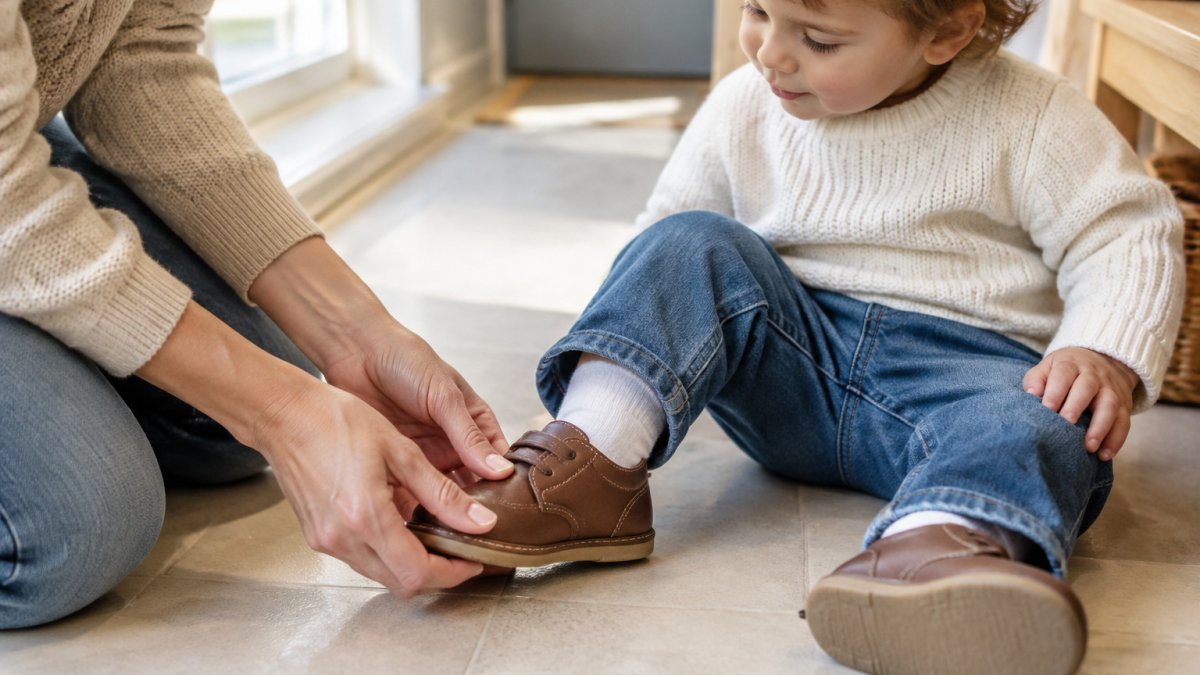
Watch for signs that shoes have become too small: toes pressing against the front, red marks on the top of the foot after wear, the heel lifting out, or your child complaining of tight feet. Any of these means it is time to size up.
Cost, Lifespan and Seasonal Value: Is It Worth Paying More?
Leather and well-made synthetic shoes can be worth considering where durability matters, since a pair that lasts longer may be better value over time. Our shoes range from £19.86 to £29.95, so you can compare value across different styles. Consider how many months your child will wear each pair before outgrowing it, because toddlers outgrow shoes quickly, often every two to three months in the first two years of walking.
A useful way to judge value is cost per wear. A £29.95 pair worn daily for three months works out at roughly 33p per day, while a £12 pair that loses its shape or sole grip after six weeks can cost more per day of comfortable wear. The calculation only favours the cheaper shoe if your child will genuinely wear it for the same period, which is rarely the case when the upper is stiff or the sole wears through.
Seasonal versatility is where leather earns its keep. Leather can feel more breathable than some coated materials. Avoid drying leather shoes on a radiator, as heat can damage the upper. A single well-chosen leather pair can often cover more of the year than a cheaper seasonal pair.
If you are buying or handing on shoes second-hand, check the sole tread and the heel counter for wear before passing them on.
For a child who will wear a pair for one season only, a lower price may be the right choice. For a pair you expect to last through a full season and possibly to a younger sibling, durability matters more. Buying a size up to "grow into" a shoe can cause tripping, so choosing a size that fits now is generally advisable.
Toddler shoe prices at Chez-Suzieaby (£)
Choosing Your Next Pair of Toddler Shoes
Start with your child's stage, then pick the material and sole that suit it. Measure the foot, check the size chart and choose a shoe that fits with a little room. Browse the full range at Chez-Suzieaby to find a pair that matches your child's needs and your budget.
Quick checklist before you buy:
- Measure the foot in centimetres and add 0.5 to 1 cm
- Match the size to the insole length on the chart
- Choose a soft sole for early walkers, a grippier sole for outdoor play
- Check the upper for flexibility and breathability
- Plan to re-measure every two to three months
Frequently Asked Questions
Are leather toddler shoes good for toddlers?
Leather toddler shoes are a good choice for most toddlers because the upper is soft, flexible and breathable, allowing the foot to move naturally. Leather is not a requirement, though. What matters most is a flexible sole, a secure closure and a fit with roughly a thumb's width of growth room at the toes. Check those points first, then compare materials.
Do toddlers need leather shoes?
No. Toddlers do not need leather shoes to develop normally. Their feet need room to spread, a flexible sole that bends at the ball of the foot, and a snug heel. Many well-made canvas and synthetic shoes meet those requirements at a lower price. Leather earns its cost through durability, breathability and the way it softens with wear, so it suits families who expect a pair to last through several months of walking or who want a shoe that handles mud and damp well.
How should toddler shoes fit?
Toddler shoes should be long enough to leave about 0.5 to 1 cm beyond the longest toe, wide enough that the toes can spread, and snug enough at the heel that the child cannot lift the heel out. Fasteners such as Velcro straps let you adjust the fit across the instep. Check the fit while the child is standing, and again after a few minutes of walking, because feet swell slightly during the day.
How often should you check a toddler's shoe size?
Check your toddler's shoe size every two to three months, since small children's feet can grow quickly, particularly in the first three years. Measure both feet, as one is often slightly larger, and fit to the larger foot. Look for warning signs such as redness on the toes or sides of the foot, rubbing at the heel, or the toes pressing against the front of the shoe when standing.
