

Why Choose Organic Cotton for Babies: A Parent's Guide

Table of Contents
- Why Organic Cotton Matters for Your Baby
- Organic Cotton Baby Clothes: What Sets Them Apart
- Organic Cotton for Sensitive Skin: The Real Benefits
- Understanding GOTS Certified Baby Clothes
- How to Wash Organic Cotton Baby Clothes and Maintain Quality
- Cost, Durability, and Long-Term Value
- Making the Switch: Practical Guidance for Parents
- Frequently Asked Questions
Last Updated: October 7, 2026
Why Organic Cotton Matters for Your Baby
Why choose organic cotton for babies is an increasingly common question.

Organic cotton is grown without synthetic pesticides, fertilisers, or GM seeds; conventional cotton is one of the most heavily sprayed crops in the world. That distinction shapes both the environmental footprint and the fabric your baby wears.
This guide covers what makes organic cotton different, how it benefits sensitive skin, what certifications mean, and how to care for pieces so they last.
Organic Cotton Baby Clothes: What Sets Them Apart
The core difference is how the cotton is grown. Conventional cotton relies on synthetic pesticides and fertilisers; organic farmers use natural pest management, crop rotation, and composting.
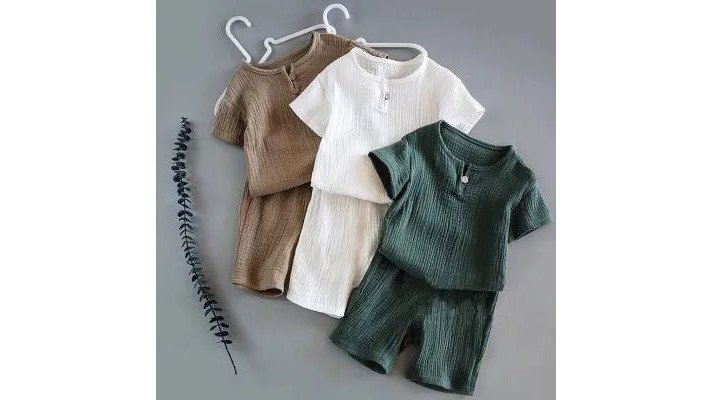
That creates a tangible difference in the fabric: organic fibres retain fewer chemical residues, soften with washing rather than stiffen, and breathe more naturally, which matters for babies who can't regulate body temperature as efficiently as older children.

Softness and breathability for everyday comfort
Organic cotton feels noticeably softer against a baby's skin.
Breathability matters too. Babies overheat quickly, and organic cotton's natural fibres let air circulate to regulate temperature, especially critical for newborns, whose temperature control is still developing.
Our Gender Neutral Baby Onesies in organic cotton are crafted with 95% cotton composition, designed specifically for this balance of softness and breathability. The fabric drapes gently without being too thin, making them suitable year-round.
Why conventional cotton carries chemical residues
Conventional cotton farming uses more pesticides per hectare than any other single crop. After harvest, it's processed with additional chemicals, dyes, and finishes to improve colour fastness and reduce wrinkling.
Many of these chemicals don't fully wash out and remain in the finished fabric.
Organic cotton avoids this chemical load from the start: no synthetic pesticides, gentler and more tightly regulated processing, and significantly lower chemical residue.
Organic Cotton for Sensitive Skin: The Real Benefits
Sensitive skin in babies is surprisingly common, some are born with it, others develop it over time. Either way, the fabric they wear influences how their skin responds.
Reducing irritation and rash risk
Irritation happens when fabric fibres or chemical residues trigger an inflammatory response. Babies have thinner, more permeable skin than adults and their skin barrier is still developing, making them more vulnerable to irritants.
Organic cotton reduces irritation risk two ways: softer fibres cause less mechanical friction, and lower chemical residue means fewer triggers. Parents of babies with sensitive skin often report improvement within days of switching.
Rashes are frequently linked to moisture, heat, and friction together. Organic cotton's breathability manages moisture while its softness reduces friction, making rashes less likely to develop.
Contact dermatitis and eczema considerations
Contact dermatitis occurs when skin reacts to something it touches, for babies, often dyes, finishing chemicals, or pesticide residues in conventional cotton.
Neither condition is caused by cotton alone, but cotton quality matters.
For parents managing eczema or contact dermatitis, switching to organic cotton clothing is often one of the most impactful changes they can make, not a cure, but it removes a major source of daily irritation.
Understanding GOTS Certified Baby Clothes
Not all organic cotton is created equal. GOTS certified baby clothes meet specific standards for growing and manufacturing, but the label alone isn't enough unless you know what it verifies.
GOTS stands for Global Organic Textile Standard, the leading voluntary standard for organic textiles. It's a two-tier system: the GOTS label requires at least 70% certified organic fibres, while the "organic" grade requires at least 95%. The remainder is tightly restricted, no conventional cotton blending, no synthetic fibres beyond a small elastane allowance for cuffs and waistbands.
What GOTS actually verifies
The standard covers the entire supply chain, not just the farm. That means:
- Fibre origin, the cotton must be certified organic to a recognised standard, with transaction certificates tracking it from field to finished garment.
- Processing inputs, a restricted substances list bans or limits heavy metals, formaldehyde, aromatic solvents, and certain dyes. Only approved, low-impact dyes and finishes are permitted.
- Wastewater treatment, processing units must treat wastewater before discharge, with limits on chemical oxygen demand and toxicity.
- Social criteria, the standard requires safe working conditions, no child labour, and payment of a living wage at certified processing sites.
- Traceability, every stage from gin to garment is audited by an independent certification body, and the final product carries a licence number you can verify.
Other labels you'll see
GOTS isn't the only label on the shelf, and they don't all mean the same thing:
- Organic Content Standard (OCS), verifies the presence and amount of organic fibre in a product, but says nothing about processing chemicals, dyes, or social conditions. A garment can be OCS-certified and still be dyed with conventional chemicals.
- OEKO-TEX Standard 100, tests the finished product for harmful substances. It's a useful safety check but doesn't require the fibre to be organic at all.
- Soil Association certification, a UK-based organic certifier that covers food and textiles, often used alongside GOTS for products sold in the UK market.
- "Made with organic cotton", an unregulated marketing phrase. Without a certification body behind it, it means very little.
What to check when you're shopping
A GOTS label should carry a licence number and the certifying body's name, verifiable through the GOTS public database. If a product claims organic status but shows no certification number, treat the claim as unverified.
Also check the grade: "GOTS organic" (95%+) is a stronger claim than "made with organic" (70%+). For baby clothing worn against the skin daily, the higher grade is worth seeking out.
Gender Neutral Baby Onesies | Organic Cotton Baby Onesies →
GOTS public database to verify a certification licence number
How to Wash Organic Cotton Baby Clothes and Maintain Quality
Organic cotton requires slightly different care, but the process is straightforward, and proper washing extends garment life and keeps fabric soft.
Air dry or use low heat whenever possible. High heat damages organic cotton fibres; air drying preserves softness and extends garment life significantly.
Wash before the first wear to remove residual processing chemicals, a simple step that reduces skin irritation risk in the first days of wear.
| Care Step | Method | Why It Matters |
|---|---|---|
| Washing | Cool water, gentle detergent | Preserves fibre integrity and softness |
| Drying | Low heat or air dry | Prevents damage and extends garment life |
| Pre-wash | Wash before first wear | Removes processing residues |
| Storage | Cool, dry place | Prevents mildew and odour |
Cost, Durability, and Long-Term Value
Organic cotton baby clothing costs more upfront. Our Breathable Baby Summer Two-Piece Outfit in organic cotton is priced at £17.56, while mass-market alternatives might be £8-10. It's worth understanding where that cost comes from, and whether it pays off.
Organic farming is more labour-intensive because pest control is manual rather than chemical. Certification adds audit costs at every supply-chain stage, and approved dyes and finishes take longer to apply. These factors raise the price, but also tend to produce a more durable garment.
Cost-per-wear: the maths that matters
Cost-per-wear is simple: divide the purchase price by the number of times the garment is worn. For baby clothing, that depends on how long the piece fits and how well it survives washing.
Consider two vests:
- A £10 conventional vest that fits for eight weeks, worn roughly five times a week, then loses shape and is discarded. That's about 40 wears, or 25p per wear.
- A £25.90 organic vest that fits for the same eight weeks but holds its shape through a second child and then a third. That's roughly 120 wears across three children, or about 22p per wear.
The organic piece costs more at the till but less per wear, and it stays in circulation instead of going into textile waste. The maths only works if the garment genuinely lasts, so check construction (double-stitched seams, reinforced poppers) rather than assuming all organic cotton is durable.
Where to prioritise your spend
If organic cotton is stretching your budget, prioritise by skin contact time rather than replacing everything at once:
- Sleepwear and bodysuits, worn for 10-12 hours a day, directly against skin. Highest priority.
- Vests and base layers, worn all day under other clothing. Second priority.
- Everyday outfits, worn for shorter periods, often over a base layer. Third priority.
- Occasional or outerwear, lowest priority for organic certification.
This approach lets you capture most of the comfort and reduced-irritation benefit for a fraction of the cost of a full organic wardrobe.
Secondhand and budget alternatives
Secondhand organic cotton is one of the best-value options: pieces have already softened through multiple washes, and surviving a first child proves durability. Buying secondhand also extends garment life, reducing environmental impact per wear.
Other budget-friendly routes:
- Buy fewer, better pieces, a capsule of five or six well-made organic basics outperforms a drawer of cheap alternatives.
- Size up carefully, check measurements rather than age labels. A piece that fits for three months is better value than one outgrown in three weeks.
- Share or swap, parent groups, NCT networks, and local baby banks often circulate organic clothing.
- Look for end-of-season reductions, organic basics in neutral colours are frequently discounted when seasonal lines change.
The health-cost angle
If organic cotton reduces irritation or eczema flare-ups, there's a secondary saving: fewer prescriptions, fewer GP visits, and less time managing a distressed baby. It's hard to quantify and won't apply to every family, but for parents of babies with diagnosed eczema or contact dermatitis it's often the deciding factor.
Making the Switch: Practical Guidance for Parents
Switching to organic cotton doesn't require replacing everything at once.
Look for GOTS certification when possible. It's the most reliable indicator of what you're actually buying. Read labels carefully.
Pay attention to sizing: babies grow quickly, and pieces that fit for only a few weeks are poor value regardless of price.
Making the switch to organic cotton is an investment in comfort, health, and durability.
At Chez-Suzieaby, we've built our baby clothing range around organic cotton because we believe your baby deserves fabric that's as gentle as it is beautiful.
Frequently Asked Questions
Is organic cotton necessary for babies, or is it just marketing?
Organic cotton offers genuine benefits for babies, particularly those with sensitive skin. It eliminates exposure to synthetic pesticides, harsh dyes, and formaldehyde residues used in conventional cotton production. Babies have delicate, absorbent skin that absorbs more readily from fabrics than older children do. If your baby experiences rashes, eczema, or unexplained irritation, organic cotton often makes a measurable difference. For babies without skin sensitivities, conventional cotton is generally safe, but organic remains the gentler choice and reduces chemical exposure overall.
What does GOTS certified mean, and why does it matter for baby clothes?
GOTS (Global Organic Textile Standard) certification guarantees that organic cotton has been grown without synthetic pesticides and processed without harsh chemicals like formaldehyde or heavy metals. For baby clothes, GOTS certification is the most rigorous standard available. It ensures every step, from farm to finished garment, meets strict environmental and safety criteria. When you see GOTS certified baby clothes, you know the fabric is genuinely organic and has been handled safely throughout production, making it the best assurance for sensitive skin.
How do I care for organic cotton baby clothes to keep them soft and long-lasting?
Wash organic cotton baby clothes in cool water (30°C or below) with a gentle, fragrance-free detergent. Avoid fabric softeners and bleach, which can irritate sensitive skin and damage fibres. Dry on a low heat setting or air-dry when possible, high heat weakens cotton fibres and reduces durability. Wash new items before first wear to remove any residual processing agents. With proper care, organic cotton clothes maintain their softness and integrity through multiple children, making them excellent value despite the higher initial cost.
Why is organic cotton more expensive, and is it worth the extra cost?
Organic cotton costs more because it's grown without synthetic pesticides, requires more careful farming practices, and undergoes stricter processing standards. However, the higher price reflects genuine quality: organic cotton is softer, more durable, and lasts longer through washing and wear. Many parents find it worth the investment because a single garment can be worn by multiple children or resold secondhand. When you calculate cost-per-wear over several years, organic cotton often provides better long-term value than cheaper conventional options that pill or lose shape quickly.