

Durable Children's Clothing for Outdoor Play: A Parent's Guide

Last Updated: October 22, 2026
Quick Summary
Durable children's clothing for outdoor play combines breathable fabrics, reinforced seams, and protective features to withstand climbing, mud, and water while keeping children comfortable. Quality garments like a £27 jacket lasting three years offer better value than cheaper alternatives that fall apart in one season, costing roughly 2.5p per wear versus 4p per wear.
- A 35% cotton, 35% polyester, and 30% nylon blend balances breathability with durability and quick-drying properties.
- Reinforced knees and double-stitched seams at stress points like the crotch and underarms extend garment lifespan significantly.
- Layering with moisture-wicking base layers, breathable mid-layers, and waterproof outer shells keeps children comfortable from freezing to mild weather.
- Wash outdoor clothing inside out in cold water and air dry on flat surfaces to preserve fabric integrity and waterproof coatings.
- Quality outdoor shoes need sealed seams, waterproof membranes, reinforced toes, and flexible soles for grip on wet surfaces.
Table of Contents
- Why Durable Children's Clothing Matters for Outdoor Play
- Waterproof Jackets and Raincoats: Essential Protection
- Outdoor Clothes for Toddlers: Fit, Comfort, and Growth
- Warm Layers and Breathable Fabrics
- Footwear That Stands Up to Mud and Water
- Best Outdoor Clothing Brands for Kids: What to Look For
- How to Care for Children's Outdoor Clothing: Extend Garment Life
- Building a Practical Outdoor Wardrobe
- Frequently Asked Questions
Why Durable Children's Clothing Matters for Outdoor Play
Durable children's clothing for outdoor play isn't a luxury, it's a necessity.
The real cost of cheap clothing shows after the first wash: seams split, fabrics pill, colours fade. Well-constructed outdoor clothes last through multiple children and seasons.
Children don't slow down for bad weather. Reinforced seams, quality fabrics, and features like protected knees and secure cuffs mean your child can play freely without you worrying about clothes tearing mid-adventure.
There's also an environmental case: every garment that lasts longer means fewer replacements, less waste, and a smaller footprint.
Waterproof Jackets and Raincoats: Essential Protection
A quality waterproof jacket is the foundation of any outdoor wardrobe.
For serious outdoor play, you need a jacket that genuinely repels water rather than simply being water-resistant.
The British Standards Institution guidance on children's clothing emphasizes that waterproof garments for children should balance protection with comfort, allowing moisture from perspiration to escape.
Our Children's Dinosaur Hooded Jacket combines a cotton blend fabric with a practical hooded design, offering protection for spring and mild weather conditions.

Cotton Blend vs Polyester: What Works Best
Cotton blends offer breathability pure synthetics can't match, but pure cotton absorbs water and dries slowly. The solution is a blend combining cotton's comfort with synthetic fibres' durability and quick-drying properties.
A 35% cotton, 35% polyester, and 30% nylon blend (like our Dinosaur Hooded Jacket) delivers both: cotton keeps children comfortable, polyester holds shape after washing, and nylon adds strength.
Pure polyester jackets dry quickly and resist water well, but can feel plasticky and trap perspiration without breathable membranes.
Hood Design and Cuff Features
A well-designed hood should sit securely without blocking vision, have an adjustable drawstring, and extend far enough forward to shield the face. Poor hood design lets water run down the neck or drip onto the face.
Elastic cuffs that fit snugly prevent rain running up sleeves. The best are tight enough to seal out water but loose enough for hands to slip in and out easily, with Velcro or snap closures for adjustability.
Cuffs must also stretch comfortably over thermal layers without cutting off circulation.
Outdoor Clothes for Toddlers: Fit, Comfort, and Growth
Toddlers grow rapidly, so choose outdoor clothes with room for growth while maintaining a fit that allows free movement. Clothing that's too big creates tripping hazards; too tight restricts play.
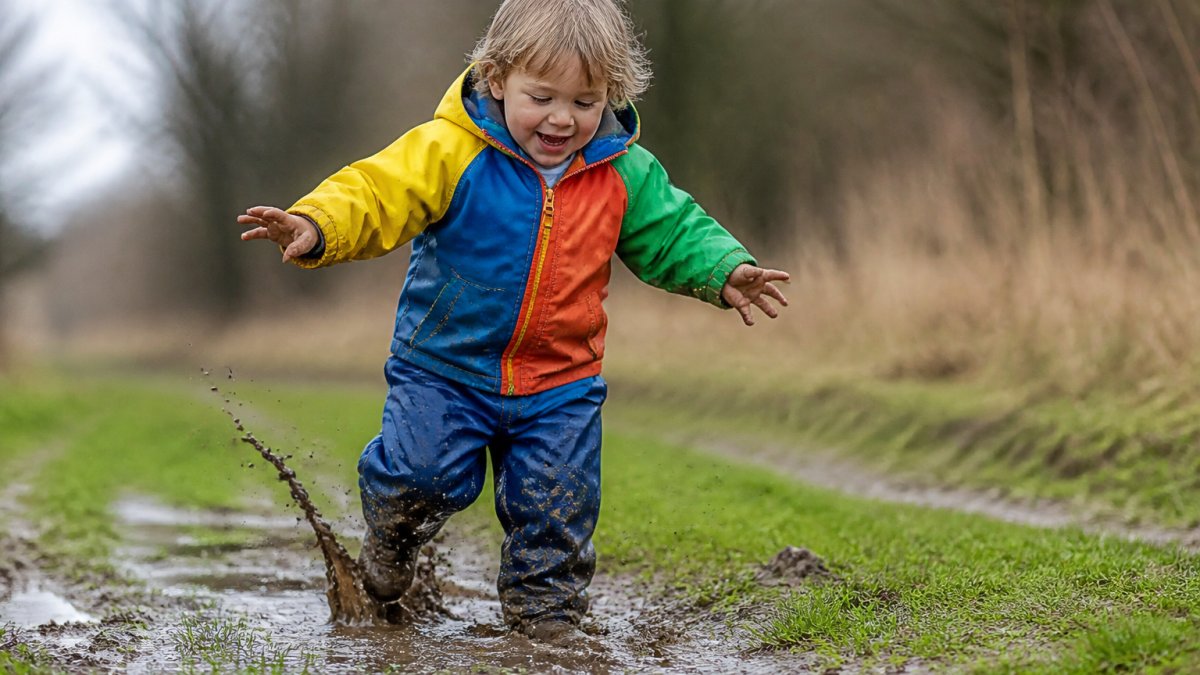
The solution is adjustable features: drawstring waists, rolled cuffs that can be unrolled, and generous but not oversized fits.
Our Kids Comfortable Sports Suit Set comes in sizes from 9 months through 4T, with a design that accommodates growth without sacrificing comfort. The sporty fit provides freedom of movement essential for toddlers learning to climb, run, and explore.
Sizing for Layering and Rapid Growth
Cooler months mean layering: a base layer, a mid-layer for warmth, and an outer shell. Clothes must accommodate these layers without becoming bulky or restrictive, too tight restricts movement, too loose loses protective benefits.
Measure your child's chest and sleeve length, then add 5-7 centimetres for growth and layering space. Children's proportions change as they grow, so sizing up doesn't always work.
Drawstring or elastic waistbands tighten as your child grows, and rolled cuffs unroll as limbs lengthen, letting one garment serve two or three seasons.
Reinforced Knees and Durable Seams
Toddlers spend time on their knees, so reinforced knees are essential. Double-layered fabric or extra stitching dramatically extends the life of trousers.
Look for double-stitched or reinforced seams at stress points like the crotch, underarms, and where sleeves meet the body.
Turn garments inside out: tight, even stitching with no loose threads indicates quality, while uneven stitching or gaps suggest it won't hold up.
Warm Layers and Breathable Fabrics
Layering is the foundation of comfortable outdoor play in cool weather. Multiple lighter layers trap warm air while allowing flexibility, and breathable fabrics move moisture away from the skin.
Merino wool and synthetic moisture-wicking fabrics are ideal base layers, pulling sweat away from the skin. Cotton base layers absorb moisture and hold it against the skin, making children cold.
Mid-layers provide insulation without bulk. Fleece offers warmth and breathability, allowing moisture to pass through. Our Casual Hooded Jacket in polyester fibre works as both a protective and insulating piece.

Footwear That Stands Up to Mud and Water
Wellies and sturdy outdoor shoes are non-negotiable for outdoor play.
Children's Dinosaur Hooded Jacket | Boys Windproof Waterproof Jacket →
Wellies offer complete protection from water and mud, but they're not suitable for all outdoor activities.
Quality outdoor shoes for children should have reinforced toes and heels to withstand the impact of running and climbing. A flexible but supportive sole provides grip on wet surfaces and uneven ground.
Look for shoes with sealed seams and waterproof membranes rather than just water-resistant leather or canvas.
Best Outdoor Clothing Brands for Kids: What to Look For
Choosing quality outdoor clothing brands means understanding what separates genuinely durable garments from marketing hype. Several indicators reliably predict how long clothing will last and how well it will perform through active play.
At Chez-Suzieaby, we focus on comfort-focused styles for outdoor play that balance protection with practicality. Our approach prioritises breathable, durable fabrics and thoughtful design features that let children play freely without restriction.
Quality Indicators: Stitching, Seams, and Fabric Weight
Examine stitching closely before purchasing. Quality brands use tight, even stitching with no loose threads or gaps. Run your finger along seams, they should feel smooth and secure.
Fabric weight matters more than most parents realise. Heavier fabrics generally last longer than thin ones, but weight alone doesn't guarantee durability. A well-constructed lightweight fabric outlasts a poorly made heavy one.
Check how garments are finished at the edges. Quality brands fold and stitch raw edges rather than leaving them exposed. This prevents fraying and extends the life of the garment.
Value and Cost Per Wear
A £27 jacket that lasts three years costs roughly 2.5p per wear if your child wears it 100 times per year. A £15 jacket that falls apart after one season costs roughly 4p per wear. Cost per wear is a better measure of value than the initial purchase price.
Calculate value by dividing the cost by the expected number of wears. A durable jacket worn 200+ times per year for three years represents excellent value, even if the initial cost seems high.
Quality brands build garments to last, which means higher upfront costs but better long-term value. Parents who buy secondhand from quality brands get exceptional value, a £20 secondhand jacket from a reputable maker often outperforms a new £15 budget option.
How to Care for Children's Outdoor Clothing: Extend Garment Life
Proper care dramatically extends the life of outdoor clothing. Many parents inadvertently damage garments through incorrect washing or storage, reducing their lifespan by months or years. Simple care practices keep clothes looking good and functioning well through multiple seasons.
Washing and Drying Techniques
Wash outdoor clothing inside out to protect the outer surface from abrasion. Use cold water for most garments, hot water weakens synthetic fabrics and can set stains permanently.
Use mild detergent and avoid fabric softeners, which coat fabrics and reduce breathability. For waterproof garments, use a specialised waterproof detergent that maintains the water-repellent coating.
Dry outdoor clothing on a flat surface or hanging line rather than in a tumble dryer. High heat damages synthetic fabrics and can melt waterproof coatings.
Simple Repairs to Keep Clothes in Use
Small repairs prevent minor damage from becoming major problems. A loose seam caught early prevents a full split that renders the garment unwearable.
Reinforce seams that show signs of stress before they fail completely. If a seam is coming loose, carefully stitch it back together using a needle and matching thread.
Patches extend the life of garments with small tears or holes. Iron-on patches work for simple repairs, but sewn patches are more durable. For visible damage, decorative patches can actually add character to outdoor clothes.
Building a Practical Outdoor Wardrobe
A practical outdoor wardrobe doesn't require dozens of items, it requires thoughtful selection of versatile pieces that work together.
| Essential Item | Purpose | Key Features | Expected Lifespan |
|---|---|---|---|
| Waterproof jacket | Rain and wind protection | Breathable, sealed seams, adjustable hood | 2-3 years |
| Waterproof trousers | Lower body protection | Reinforced knees, adjustable waist | 2-3 years |
| Warm mid-layer | Insulation without bulk | Breathable fleece or synthetic | 2-3 years |
| Outdoor shoes | Grip and ankle support | Waterproof, reinforced toe | 1-2 years |
| Wellies | Puddle and mud play | Easy on/off, good grip sole | 1-2 years |
Start with a quality waterproof jacket and trousers, these are the foundation of outdoor play in any season.
Footwear depends on your child's activities. Families who spend lots of time in wet, muddy environments benefit from both wellies and outdoor shoes.
Our Children's Cotton Camouflage Jacket offers warm insulation for cooler weather with its polyester fibre filling, while our Kids Comfortable Sports Suit Set provides a versatile base for layering.

Building a wardrobe gradually means you're not overwhelmed by cost or storage space.
Building a practical outdoor wardrobe that actually lasts requires choosing durable children's clothing designed for active play.
Frequently Asked Questions
What makes durable children's clothing different from regular kids' clothes?
Durable children's clothing uses reinforced construction at stress points like knees and seams, heavier-weight fabrics, and quality stitching that withstands repeated washing and active play. Look for polyester blends (which resist pilling and maintain shape), nylon reinforcement in high-wear areas, and double-stitched seams. The fabric weight itself matters, thicker materials last longer through multiple children or seasons of heavy outdoor use. Brands that focus on durability often specify their fabric composition and construction details upfront.
How do I choose waterproof clothing for children that actually keeps them dry?
True waterproof clothing uses polyester fibre or similar synthetic materials that repel water, not just resist it. Check product descriptions for 'waterproof' rather than 'water-resistant' or 'shower-proof', these terms mean different levels of protection. Features matter too: sealed seams, overlapping hood design, and elastic cuffs prevent water from creeping in. For serious wet weather, look for jackets with taped seams. Test the fabric weight, heavier polyester provides better protection than lightweight versions. Our Children's Dinosaur Hooded Jacket, for example, combines polyester with cotton and nylon for both water protection and breathable comfort.
How often should I replace outdoor clothes for toddlers if they're growing so quickly?
Rather than replacing entire outfits, buy durable basics in slightly larger sizes and layer underneath. Outdoor clothes for toddlers should be chosen for overlap across growth stages. Reinforced trousers with adjustable waistbands or elasticated cuffs adapt to growth better than tailored pieces. Quality jackets and sturdy footwear justify the investment because they survive multiple children or hand-me-down cycles. Focus durability spending on items that take the most wear, waterproof jackets, reinforced trousers, and wellies, and rotate lighter layers as children grow.
What's the best way to care for children's outdoor clothing to make it last longer?
Wash outdoor clothing inside-out in cold water to reduce fading and fabric stress. Use mild detergent and avoid fabric softener, which coats synthetic fabrics and reduces water resistance. Air-dry whenever possible, heat from tumble dryers degrades polyester and weakens seams. For waterproof jackets, check care labels before washing; some need special treatment to maintain water-repellent finishes. Inspect seams and hems regularly for small tears and repair them immediately with needle and thread to prevent larger damage. Store clothes in a dry place away from direct sunlight to prevent degradation.
