

Durable Clothes for Fast Growing Toddlers

Table of Contents
- Why Durable Clothes Matter for Fast-Growing Toddlers
- Best Materials and Fabrics for Long-Lasting Toddler Wear
- Grow-With-Me Clothes: Features That Extend Garment Life
- Understanding Sizing and Fit for Growing Children
- Best Baby Clothing Brands for Durability
- How to Extend the Life of Toddler Clothes
- Cost-Per-Wear: Why Quality Matters
- Frequently Asked Questions
Last Updated: September 20, 2026
Why Durable Clothes Matter for Fast-Growing Toddlers
Toddlers outgrow clothes rapidly, forcing parents to constantly replace entire wardrobes. The answer lies in understanding what makes durable clothes for fast growing toddlers genuinely different from standard children's wear.

When you invest in quality, durable clothing designed to withstand growth spurts and active play, you're not just buying garments, you're building a wardrobe that works harder for your money. According to research on children's clothing consumption patterns, families with rapidly growing children often spend significantly more on clothing than necessary, simply because they're replacing items before they've truly worn out.
Durable clothes reduce costs and waste while maintaining shape, colour, and comfort through repeated washing.
Best Materials and Fabrics for Long-Lasting Toddler Wear
Organic Cotton and Natural Fibres
Organic cotton is a strong choice for durable toddler wear, retaining natural strength and breathability through countless washes.

Organic cotton, linen, and bamboo resist pilling and fading, with bamboo offering durability and softness for sensitive skin.
Natural fibres' breathability prevents overheating and skin irritation, reducing wash frequency and extending garment life.
Reinforced Seams and Durable Construction
Reinforced seams at stress points (crotch, armpits, hems) determine whether clothes survive toddler wear or fall apart.
Flat-felled seams (folded and stitched twice) contribute to durability.
Reinforced hems and cuffed hems allow garments to be let down as children grow, extending wear windows significantly.
Grow-With-Me Clothes: Features That Extend Garment Life
Adjustable Waistbands and Cuffed Hems
Adjustable waistbands with elastic or expandable panels accommodate waist size changes while maintaining comfort and security.
Cuffed hems can be gradually uncuffed as children grow, extending usable lifespan.
Expandable Designs for Multiple Growth Stages
Well-proportioned garments with stretchy fabrics can fit across wider size ranges.
Understanding Sizing and Fit for Growing Children
Sizing for durable clothes for fast growing toddlers is inconsistent across brands because no standardised sizing exists; manufacturers set their own proportions.
Why Standardised Sizing Doesn't Exist for Toddler Clothes
Each brand interprets age-based sizing differently using height, weight, or combinations, making age-alone sizing unreliable.
Measuring Your Child for Accurate Fit
Measure three key dimensions: height (shoulder to heel), chest circumference, and waist circumference, then compare against each brand's published size chart.
Reputable brands provide detailed size charts showing height ranges and measurements.
The Growth Chart Problem: Predicting Future Fit
When buying durable clothes for fast-growing toddlers, understand your child's individual growth trajectory. Children grow at vastly different rates (5-10 cm annually), with non-linear patterns of spurts and slower periods.
Track growth over time to calculate average growth rate, allowing you to buy with appropriate room for future growth without oversizing.
Buy one size up only if the garment has adjustable features; otherwise, a well-fitted current size will be worn more frequently and longer.
Brand-Specific Sizing Patterns
Identify each brand's sizing pattern (generous vs. snug) and keep notes on fit and longevity to inform future purchases of durable pieces.
Boys Cotton Sweatpants | Boys Elastic →
The Fit-and-Grow Window
Aim for a 3-6 month "fit-and-grow window" where the garment fits well now with room for growth. Avoid perfect-fit-now (outgrown in weeks) or oversized (unwearable and unsafe).
Best Baby Clothing Brands for Durability
When evaluating brands for durability, look for transparent information about fabric composition, stitching methods, and care instructions. Brands providing detailed size charts and explaining construction choices typically demonstrate genuine durability.
How to Extend the Life of Toddler Clothes
Washing and Care Best Practices
How you care for toddler clothes has an enormous impact on their lifespan. The most important rule is to follow care instructions precisely. Washing at the recommended temperature, using appropriate detergent, and drying correctly prevents premature wear and fading.
Turning garments inside-out before washing protects the outer surface from friction and fading. This simple step is particularly important for printed or patterned clothes. Using cold water and gentle cycles extends the life of elastic waistbands and delicate seams. Avoid fabric softeners, which break down natural fibres over time, and instead opt for white vinegar as a natural alternative.
Drying matters too. Machine drying on high heat degrades elastic and weakens seams. Air-drying or using low heat settings preserves the structural integrity of the garment. This isn't just about longevity, it also maintains the shape and fit that makes grow-with-me features actually work.

Storage and Rotation Strategies
How you store clothes between seasons affects their condition when your child grows into them. Clean, dry storage in breathable containers (not plastic bags, which trap moisture) prevents mildew and musty smells. Folding rather than hanging prevents stretching, particularly important for items with elastic waistbands.
Rotating clothes strategically extends their lifespan. Rather than washing everything after each wear, rotate between several outfits so individual pieces get worn less frequently. This reduces wear patterns and gives elastic time to recover between wears. A capsule wardrobe of 5-7 core pieces in rotation will last significantly longer than a larger wardrobe where each piece is worn constantly.
Repair and Maintenance: Extending Garment Life Beyond Normal Wear
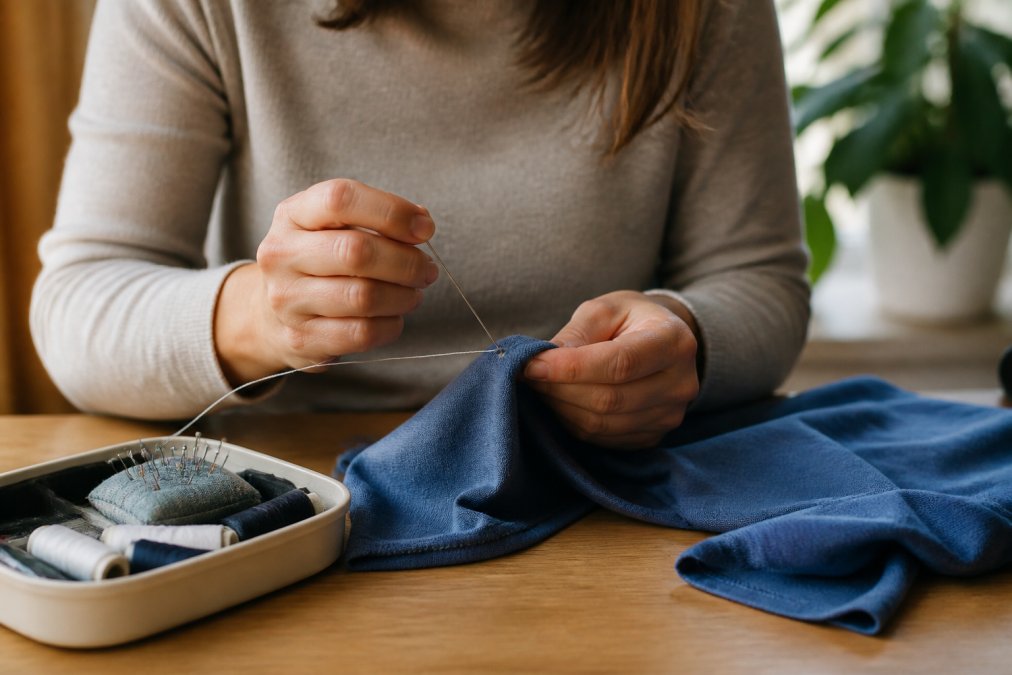
The most overlooked way to extend the life of durable toddler clothes is basic repair and maintenance. A small tear, loose seam, or worn elastic doesn't have to mean the end of a garment, these are straightforward fixes that can add months or even years to a piece's usable life. Learning these skills transforms your relationship with children's clothing, shifting from disposable to genuinely durable.
Restitching Seams: Seams are the first place garments fail under stress. A loose stitch at the armpit, crotch, or shoulder can be resewn in 10 minutes with a needle and thread. Use thread that matches the garment colour as closely as possible. A simple running stitch (in-and-out through the fabric) is sufficient for most repairs; you don't need advanced sewing skills. If a seam is coming apart, catch it early, a small gap is easier to repair than a completely separated seam.
Patching Holes: Small holes in knees, elbows, or fabric surfaces are common in active toddler wear. These can be patched using several methods:
- Fabric patch method: Cut a small square of matching or complementary fabric (slightly larger than the hole), pin it over the hole on the inside of the garment, and stitch around the edges using a simple running stitch. The patch reinforces the area and prevents the hole from growing larger.
- Iron-on patches: These adhesive-backed fabric patches can be applied with a household iron, making them accessible even for parents without sewing experience. They're less durable than sewn patches but work well for small, non-stress areas.
- Decorative patches: For visible holes, consider a decorative patch on the outside, appliqué-style, which turns a repair into a design feature. Children often find this charming, and it extends the garment's life whilst maintaining its wearability.
Replacing Elastic: Elastic in waistbands and cuffs degrades over time, becoming loose or brittle. Rather than discarding a garment with failed elastic, you can replace it. Remove the old elastic by carefully cutting the stitches that hold it in place, thread new elastic through the casing (the tunnel of fabric where elastic sits), and stitch the ends together. This repair takes 15-20 minutes and costs less than £1 for replacement elastic. It's one of the highest-value repairs you can make, because it restores full functionality to a garment that might otherwise be unwearable.
Reinforcing Stress Points: Before a garment fails, you can reinforce areas that typically wear first. The inside of the crotch seam on trousers, the underarm seams on tops, and the heel area on socks are all high-stress zones. Adding an extra row of stitching in these areas, a simple running stitch parallel to the existing seam, significantly extends the garment's lifespan. This preventative repair is particularly valuable for durable pieces you're investing in.
Addressing Pilling: Natural fabrics like cotton and bamboo can develop small balls of fibre (pilling) on the surface, particularly in areas of friction. Whilst pilling doesn't affect durability, it affects appearance. A fabric comb or even a fine-tooth brush can gently remove pills without damaging the underlying fabric.
When to Repair vs. When to Move On
Not every damage warrants repair. If a seam is torn in multiple places, or if the fabric itself is thinning or has multiple holes, the garment may be reaching the end of its life. However, for durable pieces made from quality fabrics with reinforced construction, a single repair often restores full functionality and extends wearability by months.
Cost-Per-Wear: Why Quality Matters
The financial argument for durable clothing is compelling when you calculate cost-per-wear. A high-quality pair of trousers that costs £25 and is worn 150 times before being passed down or outgrown costs approximately 17p per wear. A cheaper alternative at £12 that lasts 40 wears costs 30p per wear, more than 75% higher.
Frequently Asked Questions
What are the best features to look for in durable clothes for fast growing toddlers?
Look for reinforced seams, high-quality natural fabrics like organic cotton, and adjustable design elements such as expandable waistbands or cuffed hems. Garment longevity increases when seams are double-stitched and fabric weight is substantial. Brands offering grow-with-me designs allow clothes to fit through multiple growth stages, maximising wear time before outgrowing occurs.
How can grow-with-me clothes UK brands help save money on toddler wardrobes?
Grow-with-me clothing features adjustable waistbands, extendable hems, and stretchable fabrics that accommodate growth spurts. By extending the wearable period, you reduce the frequency of replacement purchases. Cost-per-wear improves significantly when a single garment serves multiple growth phases, making initial investment in quality pieces more economical than buying cheaper items repeatedly.
What's the best way to maintain toddler clothes so they last through multiple children?
Wash in cold water with gentle detergent to preserve fabric integrity and prevent fading. Turn garments inside out before washing to reduce pilling and wear. Avoid high heat in the dryer; air-drying extends fabric life considerably. Store clean clothes in breathable containers away from direct sunlight. Address small stains and tears immediately with simple repairs, preventing damage from worsening and extending hand-me-down quality.
Are organic cotton and sustainable fabrics actually more durable for active play?
Organic cotton offers durability when processed with proper techniques. High-quality organic fabrics undergo treatments like enzyme washing and anti-pilling processing that enhance longevity. Sustainable production often emphasises quality construction with reinforced seams and breathable fabrics that withstand frequent washing and active play better than lower-grade alternatives, making them practical choices for fast-growing toddlers.