

Buy Eco Friendly Baby Clothing Online: 2026 Guide

Table of Contents
- Why Buy Eco Friendly Baby Clothing Online in 2026
- Organic Cotton Baby Clothes Benefits for Delicate Skin
- GOTS Certified Baby Clothes and Other Labels Worth Checking
- Eco Friendly Baby Clothing Picks: What to Buy by Category
- How to Wash Organic Baby Clothes Without Losing Softness
- Cost Per Wear, Resale and End-of-Life for Baby Clothes
- Conclusion
- Frequently Asked Questions
Last Updated: September 13, 2026
Why Buy Eco Friendly Baby Clothing Online in 2026
Shopping for a baby's wardrobe has changed. Parents now read labels the way they once read nutrition guides, and for good reason: a newborn's skin is thinner and more absorbent than an adult's, so what sits against it matters. This guide from Chez-Suzieaby walks through what to look for when you buy eco friendly baby clothing online, from fibre choices to certification labels, plus how to make each piece last through growth spurts and hand-me-downs.
The case for buying online is simple. You get the full range of organic cotton baby clothes in one place, you can compare certification claims side by side, and you can check sizing charts before you commit. What you lose is the ability to touch the fabric first, which is exactly why the label matters more than the photo.
Organic Cotton Baby Clothes Benefits for Delicate Skin
Organic cotton baby clothes benefits come down to three things: breathability, softness, and fewer skin reactions. Conventional cotton is often treated with finishing agents and dyed with chemicals that can linger in the fabric, while organic cotton is grown without synthetic pesticides and processed with stricter limits on what touches the fibre.
Breathability, Softness and Fewer Skin Reactions
Breathable fabrics regulate temperature, which matters because infants cannot yet manage their own. Cotton lets air circulate and wicks moisture away, so a baby stays comfortable rather than clammy. Softness follows from the fibre length: organic cotton tends to be handled more gently through processing, which keeps the surface smooth against skin.
If your baby has eczema or reacts easily to synthetic blends, natural fibres are usually the safer starting point. A common mistake is assuming "soft" on the product page means hypoallergenic; it does not. Check what the fabric is actually made of, and wash new garments before the first wear.
GOTS Certified Baby Clothes and Other Labels Worth Checking
GOTS certified baby clothes meet the Global Organic Textile Standard, the most comprehensive textile certification available. It covers the whole supply chain: a minimum of 70% organic fibre for the "made with organic" grade and 95% for the "organic" grade, restricted chemical use in processing, wastewater treatment, and social criteria for workers (global-standard.org). If you want one signal that carries real weight, this is the label to prioritise.
Other marks to know, and what each one actually proves:
- OEKO-TEX Standard 100: tests the finished garment for harmful substances at four product classes, with Class I reserved for baby articles (oeko-tex.com). Useful for chemical safety, but it does not guarantee organic fibre.
- OEKO-TEX Made in Green: combines the Standard 100 chemical test with a traceable, socially responsible production chain.
- Fairtrade: focuses on fair wages and working conditions for farmers and workers, not fibre content. A garment can be Fairtrade without being organic.
- Soil Association: a recognised organic certification body for textiles and food, and the UK organic certifier most parents will encounter on packaging.
- Global Recycled Standard (GRS): verifies recycled content in fabrics such as recycled polyester, relevant if you are buying blends rather than pure cotton.
How to Verify a Certification Claim
A genuine claim names the standard and, ideally, a licence number you can check. GOTS licence numbers are searchable on the public GOTS database, and OEKO-TEX certificate numbers can be verified on the OEKO-TEX label check. If a product page says "organic" but names no certifying body, treat it as unverified.
Sizing Guide for Newborns and Toddlers
Certification matters, but so does fit, because a garment that does not fit gets worn twice and then sits in a drawer. Baby sizing in the UK typically runs by weight and age, and the two do not always agree:
| Size label | Approximate age | Approximate weight |
|---|---|---|
| Newborn / Tiny baby | Up to 1 month | Up to 3.2 kg (7 lb) |
| 0-3 months | 0-3 months | 3.2-6.4 kg (7-14 lb) |
| 3-6 months | 3-6 months | 6.4-8 kg (14-17.5 lb) |
| 6-9 months | 6-9 months | 8-9.5 kg (17.5-21 lb) |
| 9-12 months | 9-12 months | 9.5-11 kg (21-24 lb) |
| 12-18 months | 12-18 months | 11-13 kg (24-28.5 lb) |
A common pattern is that babies outgrow length before they outgrow width, so a baby can be in 3-6 month sleepsuits at eight weeks if they are long. Buy base layers true to weight, and buy layering pieces one size up so they stretch across two seasons. Always check the individual brand's chart rather than assuming a size label means the same thing across retailers.
Eco Friendly Baby Clothing Picks: What to Buy by Category
Building a practical wardrobe beats buying piece by piece. The categories below cover the essentials, with real options from Chez-Suzieaby at each price point so you can see what a fair price looks like.
| Category | Product | Price | Best For |
|---|---|---|---|
| Everyday base layer | Gender Neutral Baby Onesies | £25.90 | Newborn essentials, gifting |
| Sleep and play | Comfortable Cotton Infant Jumpsuit | £23.38 | Daily wear, naps, outings |
| Warm layer | Comfortable Baby Sweater | £22.57 | Autumn and winter layering |
| Seasonal set | Breathable Baby Summer Two-Piece Outfit | £17.56 | Warm-weather days |
| Outerwear | Soft Pure Cotton Newborn Monk Style Set | £17.93 | Newborn layering, cooler evenings |
Everyday Essentials and Sleepwear
For the first months, you want pieces that survive frequent washing and make nappy changes quick. The Gender Neutral Baby Onesies at £25.90 are a solid base layer: soft against skin, and neutral enough to pass down regardless of who wears them next. For sleep and daytime, the Comfortable Cotton Infant Jumpsuit at £23.38 is a one-piece that handles tummy time and naps without fuss.


Layering and Seasonal Pieces
Layering is where cost-per-wear improves fast. A sweater worn three seasons a year costs far less per wear than a novelty outfit worn twice. The Comfortable Baby Sweater at £22.57 works as a mid-layer under a coat, while the Breathable Baby Summer Two-Piece Outfit at £17.56 covers warmer days. For newborns, the Soft Pure Cotton Monk Style Set at £17.93 gives you a breathable outer layer that is easy to get on and off.

How to Wash Organic Baby Clothes Without Losing Softness
Washing correctly is what keeps organic cotton soft and keeps chemical residue off your baby's skin. The short version: cold water, mild detergent, no fabric softener, and air dry where you can. But for a baby with eczema or sensitive skin, the detail matters more than the summary.
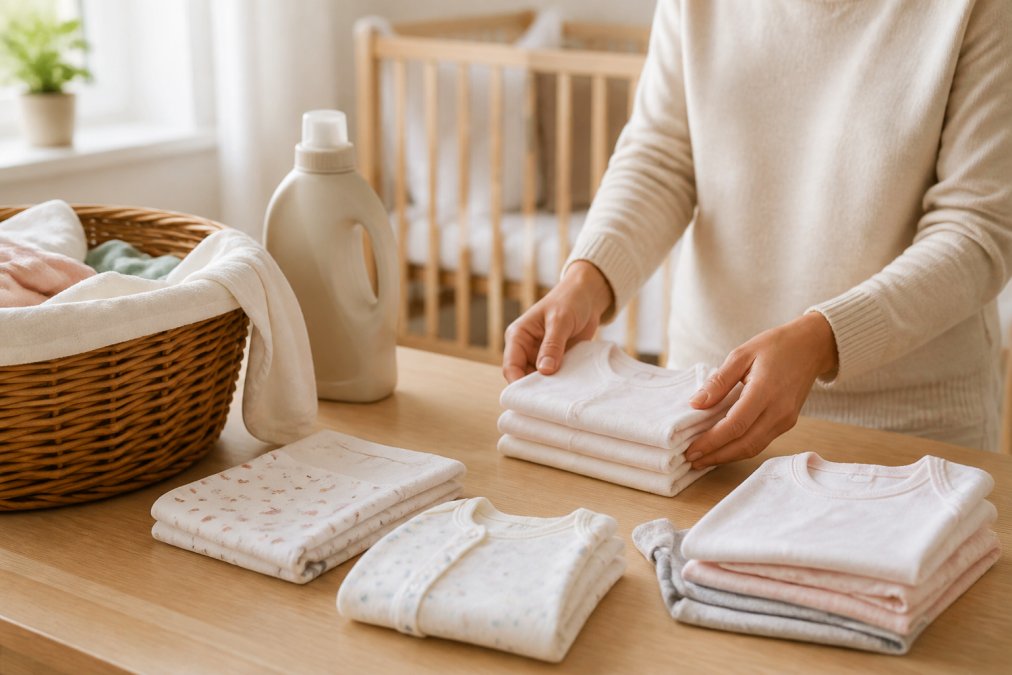
A Chemical-Free Laundry Routine
- Wash at 30°C or lower on a gentle cycle to protect the fibres (gov.uk)
- Use a mild, fragrance-free detergent; skip optical brighteners and fabric softener, which coat the fibre and reduce absorbency
- Turn garments inside out and wash with similar colours
- Air dry flat or on a line; tumble dry on low only if you must
- Treat stains promptly with a gentle pre-wash rather than hot water
Hot water and harsh detergent are the two fastest ways to turn soft cotton stiff. If you are washing for a baby with sensitive skin, an extra rinse cycle helps remove any detergent left in the fabric.
Why This Matters for Eczema and Sensitive Skin
A baby's skin is thinner and more absorbent than an adult's, so residue that would be negligible on an adult can sit against a baby's skin for hours. Most practitioners find that the biggest triggers are not the fabric itself but what is left on it: fragrance, dyes, optical brighteners, and detergent residue. That is why the laundry routine matters as much as the certification.
A practical approach for eczema-prone babies:
- Choose fragrance-free, dye-free detergents, and look for ones labelled for sensitive skin
- Avoid fabric conditioners and dryer sheets entirely; they leave a film on the fibre
- Double-rinse if your machine has the setting, or run a second rinse cycle
- Wash new garments before first wear to remove any finishing agents
- Keep the wash load loose so garments rinse properly rather than sitting in detergent water
Detergent Choices and What to Avoid
Non-bio detergents are the usual starting point because they lack the enzymes that can irritate skin, though some babies tolerate bio fine. What matters more is the absence of added fragrance and dyes. Look for short ingredient lists and avoid anything with "parfum" or "perfume" near the top. Eco-friendly detergents are not automatically gentler; some plant-based formulas still contain essential oils that can trigger reactions, so patch-test by washing one garment and watching for a change in your baby's skin before switching the whole load.
Keeping Softness Over Time
Organic cotton softens with washing rather than degrading, provided you avoid heat and harsh chemistry. Air drying preserves the fibre structure better than a tumble dryer, and storing clean, dry garments away from damp prevents the musty smell that tempts parents to over-wash. A garment washed at 30°C and air dried will typically outlast the same garment washed hot and tumble dried, which is also what makes the cost-per-wear maths work in your favour.
Cost Per Wear, Resale and End-of-Life for Baby Clothes
Cost per wear is the honest way to judge whether a garment was worth buying. Divide the price by the number of times it is actually worn. A £25.90 onesie worn three times a week for three months works out at well under a pound per wear; a cheaper piece that loses shape after five washes does not.
That maths changes how you shop. Durable, well-made pieces cost more upfront but win on cost per wear, and they hold enough quality to be resold, passed to a sibling, or donated rather than binned. When a garment does reach the end of its life, natural fibres like cotton biodegrade, while synthetic blends linger. Circular clothing habits, resale, hand-me-downs, and textile recycling, keep usable garments out of landfill and stretch every purchase further.
Conclusion
Paying more for organic cotton only makes sense if the garment is genuinely certified, genuinely soft, and genuinely durable enough to be worn again and again. That is the standard we hold ourselves to at Chez-Suzieaby: comfort-focused styles for babies, boys, and girls across every season, with quality parents can rely on. If you want a wardrobe that survives growth spurts and hand-me-downs, start with our organic cotton baby clothes and build from there. Add to cart and dress your little one in comfort that lasts.
Frequently Asked Questions
Where can I find toxic-free baby clothing?
Look for garments carrying recognised safety and organic certifications, such as GOTS certified baby clothes or OEKO-TEX standard labels, which test for harmful substances and non-toxic dyes. Buying directly from a brand that publishes its fabric composition and care guidance, like Chez-Suzieaby, makes it easier to check what you are getting. Avoid strong chemical smells on arrival, and wash new items before the first wear to remove any finishing residues.
What certifications should I look for when buying organic baby clothes?
The main ones are GOTS, which covers organic fibre content and processing, and OEKO-TEX standard, which tests finished fabrics for harmful substances. Fairtrade certification indicates fair wages and working conditions in the supply chain. A garment can carry more than one label. Check that the certification applies to the specific product, not just the brand's general marketing, and look for a certification number you can verify rather than a logo alone.
Are eco-friendly baby clothes more durable than conventional options?
Natural fibres such as organic cotton often hold their shape and softness better across repeated washes than thin synthetic blends. Durability also depends on construction, so look for flat stitching, reinforced seams and a fabric weight suited to daily wear. Washing on a cool, gentle cycle and air drying extends the life of any garment, eco-friendly or not.
How can I identify greenwashing in baby clothing brands?
Vague claims like 'natural' or 'planet-friendly' mean little without evidence. Look for specific certifications, named fibre percentages on the label, and clear care and sourcing information. Genuine brands usually explain where their cotton comes from and how to wash organic baby clothes to keep them lasting. If a site talks about sustainability but lists no standards, no fibre breakdown and no supply chain detail, treat the claims with caution and ask customer service directly.
Where can I find affordable sustainable baby clothing online?
Affordable sustainable baby clothing comes down to cost per wear rather than the sticker price. At Chez-Suzieaby, a breathable two-piece summer outfit is £17.56 and a pure cotton newborn set is £17.93. Choosing multi-season pieces, sizing up slightly for growth and passing garments between siblings all lower the real cost. Buying a few durable basics beats a large haul of cheap items that lose shape quickly.