

How to Choose the Right Kids Accessories

Table of Contents
- Start with Safe Children's Accessories Materials
- Prioritise Age-Appropriate Accessories for Toddlers
- Balance Comfort, Durability, and Style
- Consider Weather Suitability and Seasonal Needs
- Get the Fit Right: Size and Secure Fastening
- How to Organise Kids Accessories for Easy Access
- Embrace Sustainable and Sensory-Friendly Options
- Frequently Asked Questions
Last Updated: October 2, 2026
Start with Safe Children's Accessories Materials
When you're choosing kids accessories, safety comes first. The materials touching your child's skin matter more than you might think.
What makes a material safe for children
Safe materials for children are non-toxic, free from harmful dyes, tested against strict safety standards, and certified hypoallergenic. They should breathe well, feel soft, and not irritate sensitive skin.
Cheap dyes can leach onto skin when wet or in hot weather, so checking material composition is essential.
Checking for non-toxic dyes and hypoallergenic fabrics
Start by reading the product label carefully. Look for these markers:
- Certified organic cotton or other natural fibres
- OEKO-TEX certification, this means the material has been tested for harmful substances
- Hypoallergenic labelling, indicates the fabric is less likely to trigger allergic reactions
- Machine washable at safe temperatures, easier to keep clean without damaging the material
Ask retailers about their dye process. If a brand won't disclose where materials come from or how they're dyed, that's a red flag.
Prioritise Age-Appropriate Accessories for Toddlers
Age-appropriate accessories protect your child and ensure the item stays on. What works for a five-year-old can be dangerous for a toddler.
Avoiding choking hazards for younger children
Small detachable parts, beads, buttons, and charms are serious choking hazards for children under three (Choking). If a piece is smaller than a toilet paper tube, it's too small.
Check every fastening and decoration:
- Hair clips should have secure, closed mechanisms that can't come loose
- Elastic should be wide and sturdy, not thin strings
- Decorations should be sewn on firmly, not glued or loosely attached
- Avoid accessories with small magnetic pieces or loose gems
Our collection of Cute Bunny Hair Clips For Girls features secure fabric construction with no small detachable parts, ideal for younger children who need accessories that stay put without creating hazards.

Matching accessories to developmental stages
Toddlers (ages 1-3) need simple, secure accessories with wide, gentle grips and no sharp edges. Ages 3-5 can handle slightly more complex items with child-friendly fasteners. By age 6-8, children have better coordination and can manage more delicate pieces while maintaining safety standards.
Balance Comfort, Durability, and Style
Good kids accessories balance comfort, durability, and style, but these goals often create trade-offs parents need to understand.
Understanding material durability and how it affects comfort
Durability directly affects comfort. Natural fibres like cotton and linen are breathable but wear faster than synthetic blends.
Seam construction is where durability truly shows.
Balancing breathability with protection
Breathability and protection sometimes conflict.
Test breathability by holding the fabric up to light. If you can see through it easily, air will pass through. For items that touch skin directly (hat straps, neck accessories), this matters more than for decorative pieces.
Why comfort directly affects whether your child will actually wear the accessory
If an accessory bothers your child, they won't wear it. Even well-made clips get pulled out if they tug hair or feel heavy, so comfort testing before purchase is essential.
Common complaints: clips that pinch, heavy items (over 30 grams), tight elastic, rough edges or exposed stitching, and heat-trapping materials.
Handmade Kids Christmas Hair Accessories | Kawaii Christmas Hair Clips →
When shopping, test how the item feels in your own hand first. Gently pull on seams, flex clips, and check for rough edges. If it seems stiff, heavy, or uncomfortable to you, it will definitely bother your child.
Consider Weather Suitability and Seasonal Needs
Summer accessories should be lightweight and breathable (cotton or linen blends); UV400 sunglasses like our Best Sunglasses For Kids UV Protection provide eye protection. Winter pieces can be thicker and insulating with waterproof fabrics. Transition seasons need versatile, layered options. Consider where your child spends time: outdoor play requires weather-resistant materials; indoor time prioritises breathability and comfort.

Get the Fit Right: Size and Secure Fastening
The right fit ensures your child can wear the accessory comfortably without it falling off.
Understanding sizing charts and measurement accuracy
Every brand sizes differently. Always check the specific sizing chart and measure your child's head, wrist, or neck accordingly. Kids grow quickly; buy slightly larger sizes only for adjustable items. Know the return policy before purchasing.
Checking fastening mechanisms for security
Secure fasteners keep accessories on during play and prevent loss. Check that:
- Velcro strips are strong and well-attached
- Elastic is sewn securely, not just glued
- Clips have firm, smooth closures
- Buttons or snaps don't come loose easily
- Straps are reinforced at stress points
Test the fastening yourself before giving it to your child. If you can pull it apart easily, your child definitely will.
| Fastening Type | Best For | Security Level | Ease of Use |
|---|---|---|---|
| Velcro | Adjustable fit | High | Easy for kids |
| Elastic | Flexible hold | Medium | Very easy |
| Clips | Hair accessories | High | Requires dexterity |
| Snaps | Adjustable items | Medium | Easy for kids |
| Sewn-on | Permanent items | Very high | N/A |
How to Organise Kids Accessories for Easy Access
Organised accessories help your child find what they want and protect delicate items from damage.
Building a capsule wardrobe approach
A capsule wardrobe means choosing versatile pieces in neutral colours that mix and match. Start with basics: neutral hair clips, a seasonal hat, sunglasses, and a lightweight wrap. Add 2-3 statement pieces like festive clips or colourful items. This saves money, reduces clutter, and speeds up getting dressed.
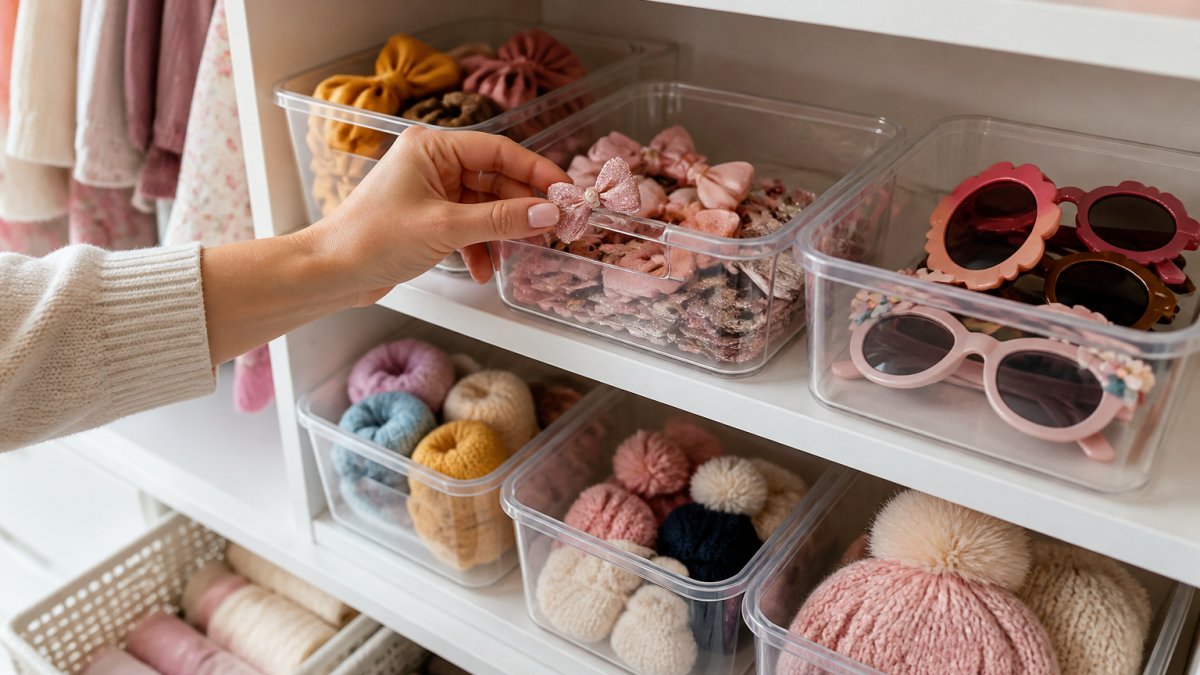
Storage solutions that work for active families
Keep accessories at child height in clear, labelled containers (by type or season). Use drawer dividers for small items and hanging organisers for larger pieces. Rotate seasonal items into storage to keep active areas manageable.
Embrace Sustainable and Sensory-Friendly Options
Environmental impact and sensory sensitivity significantly affect which accessories your child will actually wear and feel comfortable in.
Sustainable materials and why they matter for children's skin
Sustainable accessories are gentler on children's skin.
Sensory-friendly design for neurodivergent and sensitive children
Approximately 1 in 100 children are autistic, and many experience sensory sensitivities that make standard accessories uncomfortable or distressing. Sensory-friendly design isn't niche, it benefits all children but is essential for those with autism, ADHD, or sensory processing differences.
Common sensory triggers in children's accessories:
When selecting sensory-friendly accessories:
Frequently Asked Questions
What safety standards should I look for when choosing kids accessories?
Look for products that meet recognised safety standards, including secure fastening mechanisms and no small parts that could pose choking hazards for young children. Check that materials are non-toxic, hypoallergenic, and free from harmful dyes. Hair clips should have smooth edges, sunglasses should offer UV400 protection, and all fasteners should be securely attached. Always verify age recommendations on packaging and inspect accessories regularly for wear or damage.
How do I know if kids accessories are actually durable?
Durable accessories feature reinforced stitching, high-quality fabric that resists fraying, and secure attachment points. Check product descriptions for material composition. Read customer feedback about longevity, and look for brands that offer detailed care instructions, as washable accessories tend to maintain their quality through multiple washes and children.
What's the best way to build a versatile kids accessories collection?
Start with neutral basics like simple hair clips and weather-appropriate sunglasses, then add seasonal pieces. Aim for a capsule approach where each accessory coordinates with multiple outfits. Choose items in complementary colours and styles that match your child's existing wardrobe. Include both everyday pieces and special-occasion accessories. Organise them by type or season so you can easily see what you have and avoid duplicate purchases.
How can I choose age-appropriate accessories for toddlers?
Check the manufacturer's age recommendations on all products. For infants and younger toddlers, avoid accessories with small detachable parts or loose fasteners. Choose lightweight options that won't cause neck strain. As children grow, you can introduce more variety, hair clips for toddlers aged 2+, sunglasses with secure straps, and accessories that encourage self-expression. Always inspect items for potential choking hazards and ensure fastening mechanisms are secure enough that your child cannot easily remove them.